
Our leadership consists of members with diverse experience in the test and measurement industry:



Darren Fraser
Vice President of Sales
Darren Fraser's tenure at Crystal Instruments (CI) marks a transformative era in the company's trajectory, beginning when annual sales were shy of the $1 million milestone. Initially joining as a sales engineer, Darren's exceptional dedication and strategic foresight swiftly elevated him to Vice President of Sales. Under his leadership, CI witnessed a spectacular surge in sales revenue, growing more than twentyfold.
Darren's proficiency in developing and expanding sales channels on a global scale has been instrumental in CI's success. He has fostered pivotal relationships and partnerships with leading entities, including the US Navy and NASA, enhancing CI's market presence significantly.
Currently, Darren leads a dynamic team of regional sales managers and distributors, spearheading CI's marketing strategies. His commitment to excellence and his visionary approach are pivotal in propelling CI towards new heights of achievement.
Holding a Bachelor's degree in Physics and a Master's in General Engineering from California Polytechnic State University, San Luis Obispo, Darren's blend of technical insight and strategic savvy continues to be a cornerstone of CI's growth and success.
Sandeep Mallela
Director of Engineering
Sandeep Mallela embodies the exceptional expertise and dedication behind CI's pioneering products, such as Spider-81 and GRS. His role demands a deep understanding of a wide spectrum of engineering fields including electrical hardware, mechanical design, and software engineering, among others.
As Director of Engineering, Sandeep's ability to synchronize these diverse disciplines has been critical. He expertly manages both internal and external resources, ensuring projects adhere to rigorous timelines and meet all milestones, culminating in the delivery of groundbreaking products.
Sandeep's leadership in the development of the Spider-80Hi and advanced GRS products to NASA underscores his remarkable capability and vision.
Overseeing all hardware and software development and final testing at CI, Sandeep's guidance is integral to maintaining the company's tradition of excellence and innovation.
With a Bachelor's degree in Electrical Engineering from Jawaharlal Nehru Technological University and a Master's in Electrical Engineering from Texas Tech University, Sandeep's academic and professional journey underscores his profound impact on engineering innovation at CI.
Scott Zhuge
Director of Product
Scott Zhuge's Computer Science degree from Harvard University set the stage for a successful career in Silicon Valley, where he developed a rich background in software engineering and management. Yet, it was at CI where Scott found his work most rewarding, especially in collaborations with clients like Raytheon, Tesla, and SpaceX.
As the lead of CI's software development and technical support teams, Scott emphasizes the critical importance of product reliability and quality. His strategic initiatives, including the establishment of a fast response program and the development of an internal support tool, have significantly enhanced global customer support.
Under his direction, the vibration controller software has seen major advancements, including a redesigned user interface and the integration of innovative technologies, reinforcing CI's industry leadership.
Scott's goal to uphold CI's premier status in providing controller and data acquisition products for environmental testing labs is a testament to his leadership and visionary approach to product development and support.
Co-founders of Crystal Instruments
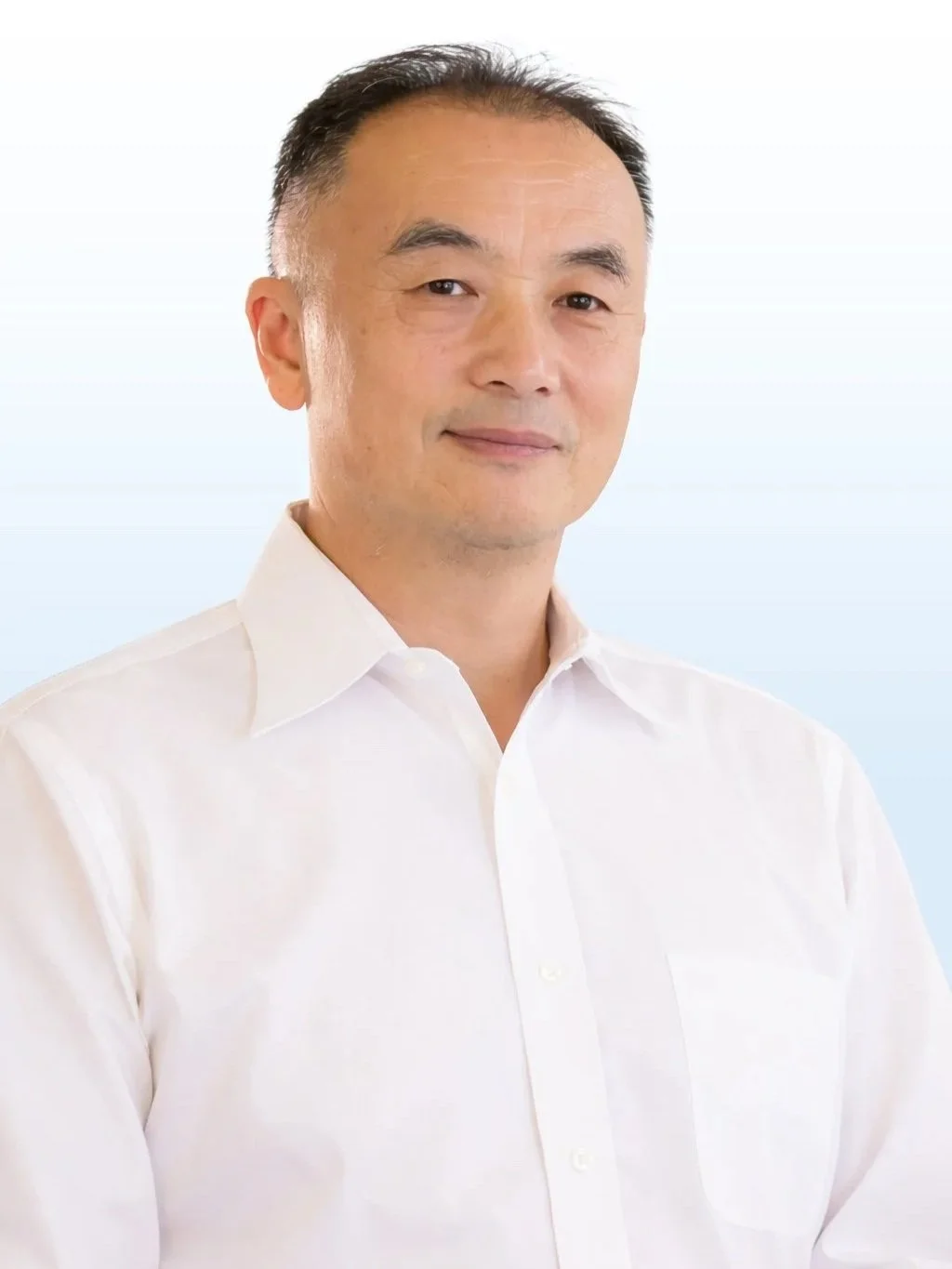
James Zhuge, Ph.D.
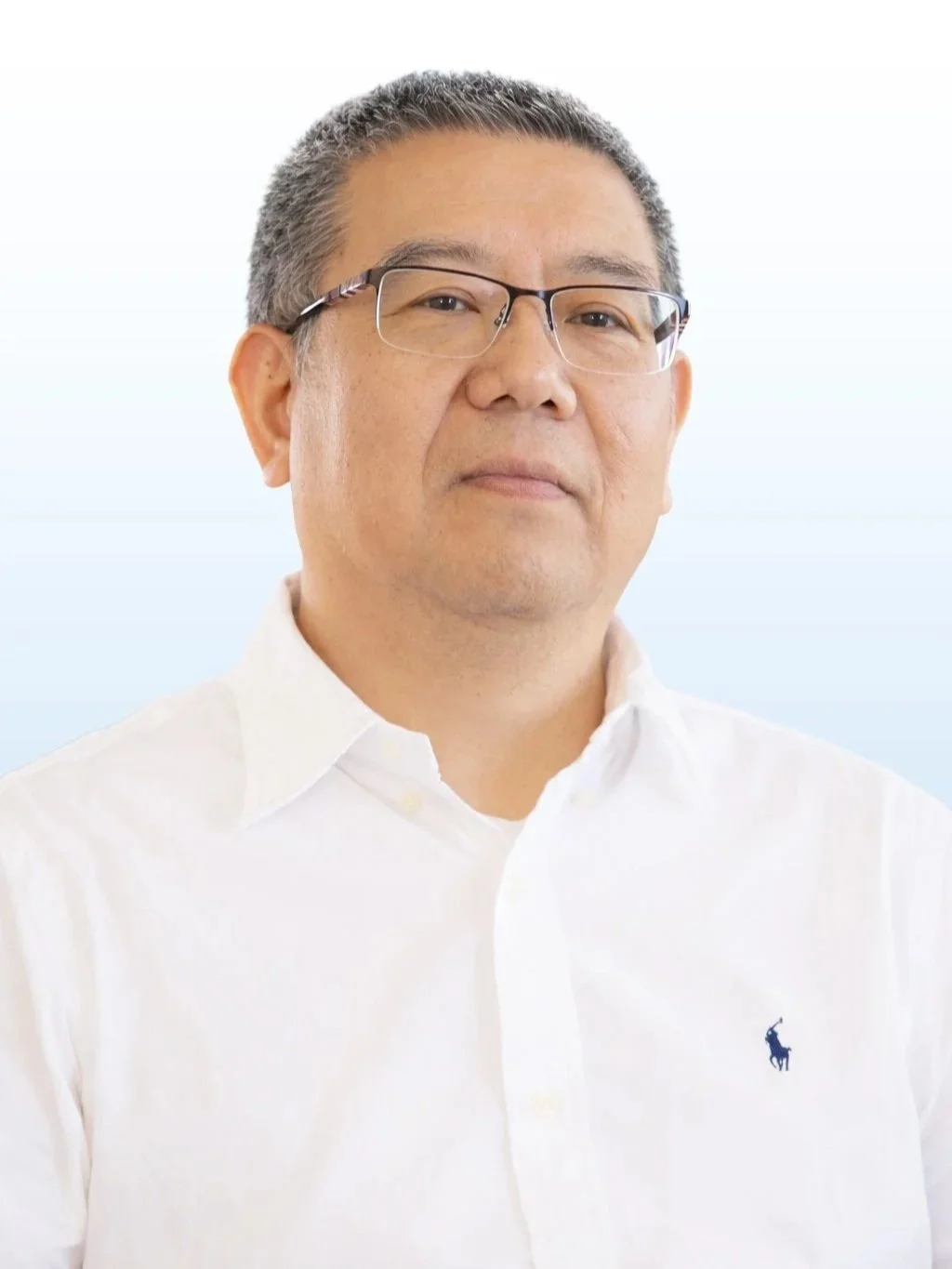
Justin Tang
In 1993, just two years after arriving in the USA, James Zhuge discovered a novel technology involving an ADC chip with a digital anti-aliasing filter, a notable departure from traditional analog filters. He noted that the bulky analog circuitry of existing dynamic measurement instruments contributed significantly to their size, with high-performance analog anti-aliasing filters occupying an excessive portion of the instruments' printed circuit board area.
With his wife's support, James left his job to develop a pioneering measurement system. He adeptly integrated an analog-to-digital converter (ADC) with a digital anti-aliasing filter into a slender 5 mm thick type-2 PCMCIA card, matching the capabilities of the HP dynamic signal analyzer. In 1996, Crystal Instruments was established, launching the "smallest dynamic signal analyzer in the world." This innovation was widely embraced by nearly all companies today in our industry. An independent survey later recognized Crystal Instruments as the first in the industry to adopt the sigma-delta A/D converter, a technology that has since become a standard in dynamic measurement systems.
That same year, James also co-founded Dactron Inc., where Justin Tang, the first employee, was responsible for hardware design. Dactron's vibration controllers quickly dominated over 50% of the global market share by unit sales, culminating in its acquisition by Bruel & Kjær/LDS.
In 2004, James and Justin departed Bruel & Kjær/LDS to revitalize Crystal Instruments. The CoCo-80, their inaugural product, was a notable success. It featured two modes of operation: straightforward route data collection and sophisticated real-time processing, offering user-friendly communication in both scenarios.
Crystal Instruments has spearheaded numerous innovations. Notably, we introduced a unique dual ADC structure for each input channel, eliminating the cumbersome manual gain adjustments often required in handheld instruments or high-channel-count systems.
In another trailblazing effort, in 2006, Crystal Instruments was among the first to incorporate IEEE 1588 PTP technology into a networked measurement platform, enabling precise synchronization of devices within tens of nanoseconds across vast distances without the need for physical clock cables.
We recently applied GPS time signals to measurement data and devised a novel algorithm for computing the cross-spectrum and transfer functions between multiple data acquisition systems spread miles apart without a physical wired connection.
In 2021, NASA selected Crystal Instruments to provide up to 175 Ground Recording Systems (CI-GRS) for noise measurement from the X-59 supersonic aircraft, marking our technology as the first dynamic signal measurement system fully integrated with advanced space technology, including GPS, ADS-B, and cellular signals.
Today, Crystal Instruments stands as a distinguished leader in dynamic measurement, vibration monitoring, and environmental testing, boasting revenues exceeding ten million US dollars. We deliver innovative solutions to a traditionally conservative market, helping our clients navigate the complexities of acoustics, resolve vibration issues, and maintain the operational efficiency of process machinery through precise monitoring and diagnostics. Our industry finds joy in introducing groundbreaking solutions to age-old challenges, a testament to the innovative spirit of Crystal Instruments.
James Zhuge earned a Bachelor's degree in Instrumentation and a Ph.D. in Mechanical Engineering from Zhejiang University, China. Justin Tang holds a BS and MS in Electrical Engineering from Beihang University, China.