

Special Product Applications
Reference articles provided by Crystal Instruments Product Managers
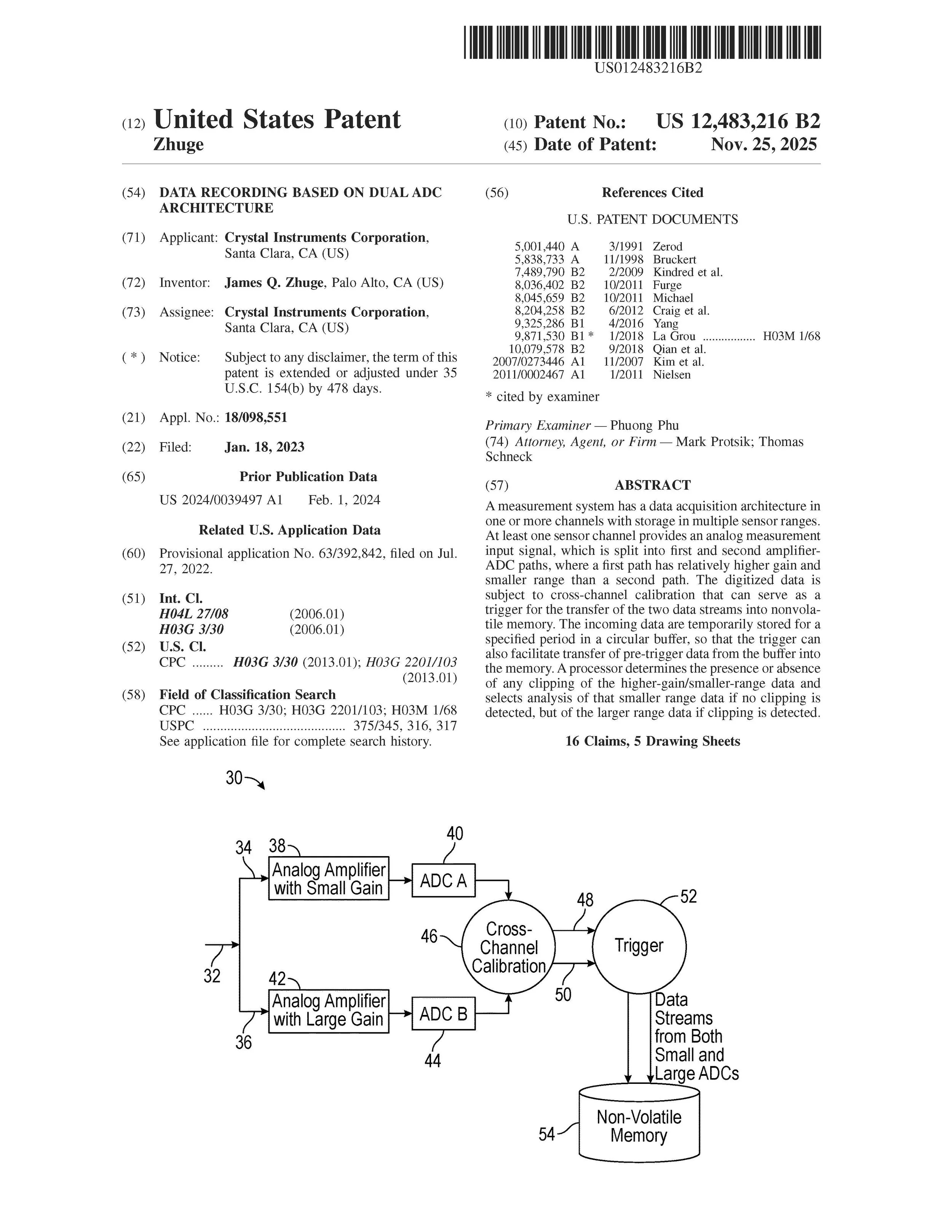
Santa Clara, CA - November 25, 2025 — Crystal Instruments Corporation, a global leader in vibration testing, dynamic measurement, and data acquisition technologies, today announced that the United States Patent and Trademark Office has officially granted U.S. Patent No. 12,483,216 B2, titled “Data Recording Based on Dual ADC Architecture.” The patent is credited to inventor James Q. Zhuge, founder and CEO of Crystal Instruments.

Digital filters are powerful tools utilized during the data conditioning phase to analyze signals. These filters empower users to augment signal processing capabilities by integrating them with other data conditioning modules, thus generating advanced post-analysis functionalities. Among the primary types of real-time digital filters are the Decimation filter, the FIR (Finite Impulse Response) filter, and the IIR (Infinite Impulse Response) filter.

We recently republished a classic white paper about dynamic signal analysis.

Our team is thrilled to announce the 11.1 version of Engineering Data Management (EDM) software. Packed with a range of new features and improvements, this update is designed to elevate the user experience.

DSA is often referred to Dynamic Signal Analysis or Dynamic Signal Analyzer depending on the context. DSA uses various technologies for digital signal processing. Among them, the most fundamental and popular technology is based on the so-called Fast Fourier Transform (FFT). The FFT transforms the time domain signals into the frequency domain. To perform FFT-based measurements, it is important to understand the fundamental issues and computations involved.

Using purpose driven equipment like the CoCo-90X, an advanced battery powered dynamic signal analyzer that scales up to 16 input channels, IVC Technologies can collect more input channels than traditional walk around data collectors and can record time streams for several minutes or longer to observe and capture data from the entire raising and lowering of the bridge in one data set. With 16 channels, vibration data can be collected on the motors, gearboxes, and sheave bearings synchronously. This both reduces the overall collection time and increases the ability to properly access the synchronous data.

The latest release of version 2.2 CoCo Software includes notable updates such as support for 1 hz resolution, an IEPE powered tachometer, Waterfall & Colormap signal reviews, and the ability to sync VDS user profiles on a CoCo device.

The auto-wake feature is a new and powerful function provided in EDM 10.0 software. This feature allows users to set up a wake-up alarm for Spiders to power on, perform a test, and power off. Users can upload up to 8 predefined tests and run these in Black Box mode (without a connection to a computer or network to run). This convenient mode allows users to acquire data autonomously or with little user intervention.

Some data acquisition applications will inevitability run into one of the most common problems of the information age: information overload. Today, modern DAQ systems, such as the highly versatile Crystal Instruments Spider product line, can store significant amounts of vibration data. Now, memory limitations are significant. However, sifting through large amounts of data in order to capture a small transient event is undesirable.

Crystal Instruments is excited to announce the release of EDM 10.0, the latest software version for all Spider and CoCo products serving advanced and fundamental industries in addition to furthering academic advancements.

Founded in 1996, Crystal Instruments designs and manufactures instrumentation products for machine vibration monitoring, dynamic measurement, and environmental testing. The products are developed in Silicon Valley and our modern lab in North Carolina. Crystal Instruments products are thoroughly tested on a variety of vibration shakers and environmental chambers in our lab during the design phase to meet the extreme requirements of military and aerospace applications.

Crystal Instruments is pleased to announce the release of EDM 9.1, the most reliable and powerful version available from Crystal Instruments.
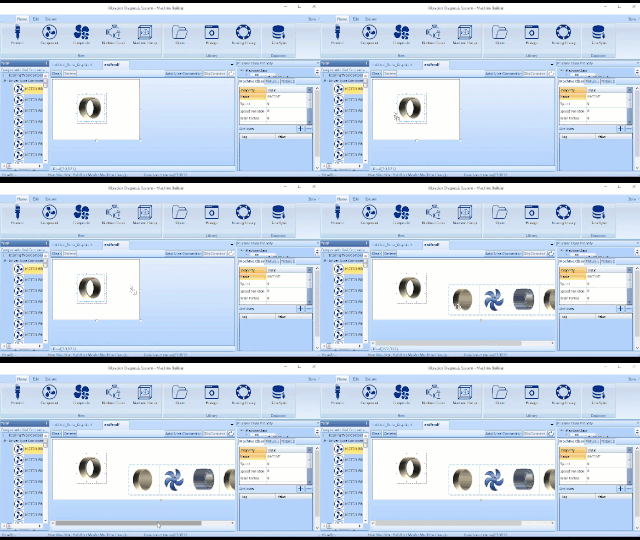
The Vibration Diagnostic System (VDS) software provides several important tools for machine predictive maintenance data collection, analysis and management. When synchronized with a CoCo handheld analyzer, the system integrates factory and route structuring, machine information, vibration data and analysis all in one place. The diagnostic algorithms are based on the concept of a machine model, and VDS provides a powerful tool for building machine models. This tool is called the Machine Builder.

The accurate measurement of micro-vibrations is the first step of successful vibration contamination control. According to generic vibration criteria for vibration sensitive equipment, the RMS velocity of vibration criterion is from 50 to 3.1 μm/s (2000 to 125 μin/s). To measure such small amplitudes, high sensitivity and low frequency sensors must be used. Crystal Instruments provides the Wilcoxon WR 731 and PCB 393B31 accelerometers with the CoCo-80X data analyzer for this application.

Off Route measurements are linked to machines in the database using a system called Job Management. When taking Off Route data, the measurements are stored under jobs and each job is assigned to a machine. The job-machine relationship is maintained after syncing the CoCo with VDS, so Off Route measurements are automatically associated with the correct machines.

Featuring the highest sampling rate provided in the industry at 256 kHz. Handheld battery powered system with wired & wireless network options and 20V input range. Sync between multiple devices. Choose the convenient portable model or industrial model for permanent mounting.
The Spider-20H, Spider-20HE, and Spider-20i received a hardware upgrade to support an impressive 256 kHz samping rate on all 4 input channels. It is the highest sampling rate offered in the market of compact analyzers. The high sampling rate is especially beneficial for measuring high orders and transient capture in blast tests, pyroshock events, drop shock tests, crash tests, etc.
In addition to the high samping rate, the input range is expanded to 20V to capture larger signals.

When designing and testing materials and products it is essential to understand its material properties and how it reacts to the forces and loads applied to it. The deformation a DUT experiences when a force is applied is called strain. Strain is the ratio of the change in length of a material to the original length. Strain can be positive (tensile) or negative (compressive).

The CoCo-70X is Crystal Instruments’ latest handheld vibration analyzer, designed specifically for the machinery Predictive Maintenance (PdM) community. The four-channel analyzer features an IP-67 rating and is ideal for a wide range of industries including petrochemical, paper, steel and other metals, automotive, aviation, aerospace, electronics and military.

What is WBV used for?
Many industrial workers are subjected to whole-body vibration on a regular basis, which can have a noticeable effect on their health. Employers are expected to provide an accurate risk assessment of whole-body vibrations resulting from use of their equipment. WBV measurements are therefore necessary to provide access to vibration emission data. The availability of accurate vibration emission data is essential to the process for employers completing a vibration risk assessment.

Remote Condition Monitoring (RCM) by Crystal Instruments is designed for the remote monitoring of equipment or structures that are inaccessible to configure within a local network. Common applications and examples of remote condition monitoring include the monitoring of vibrations during the transportation of equipment, monitoring vibrations on bridges and structures close to rails or roadways, and monitoring vibrations caused by rotating windmills on the ground.

I’ve always wondered why some instruments in the market set their hardware input range to 10 V. Perhaps the hardware designer for these instruments possessed ten fingers and chose 10 V out of convenience. I can imagine their bosses eagerly approving the use of 10 V as well, because they too have ten fingers!

Machine condition based monitoring plays an important role in securing the stealth of the submarine, as any vibration related tone passed through the hull to the outside world could betray the vessel. All onboard equipment must be meticulously monitored and maintained.

The Spider series of dynamic signal analyzers by Crystal Instruments welcomes its newest product, the Spider-20, which at 5 x 4 inches and 18 ounces is the most compact instrument in the product line.
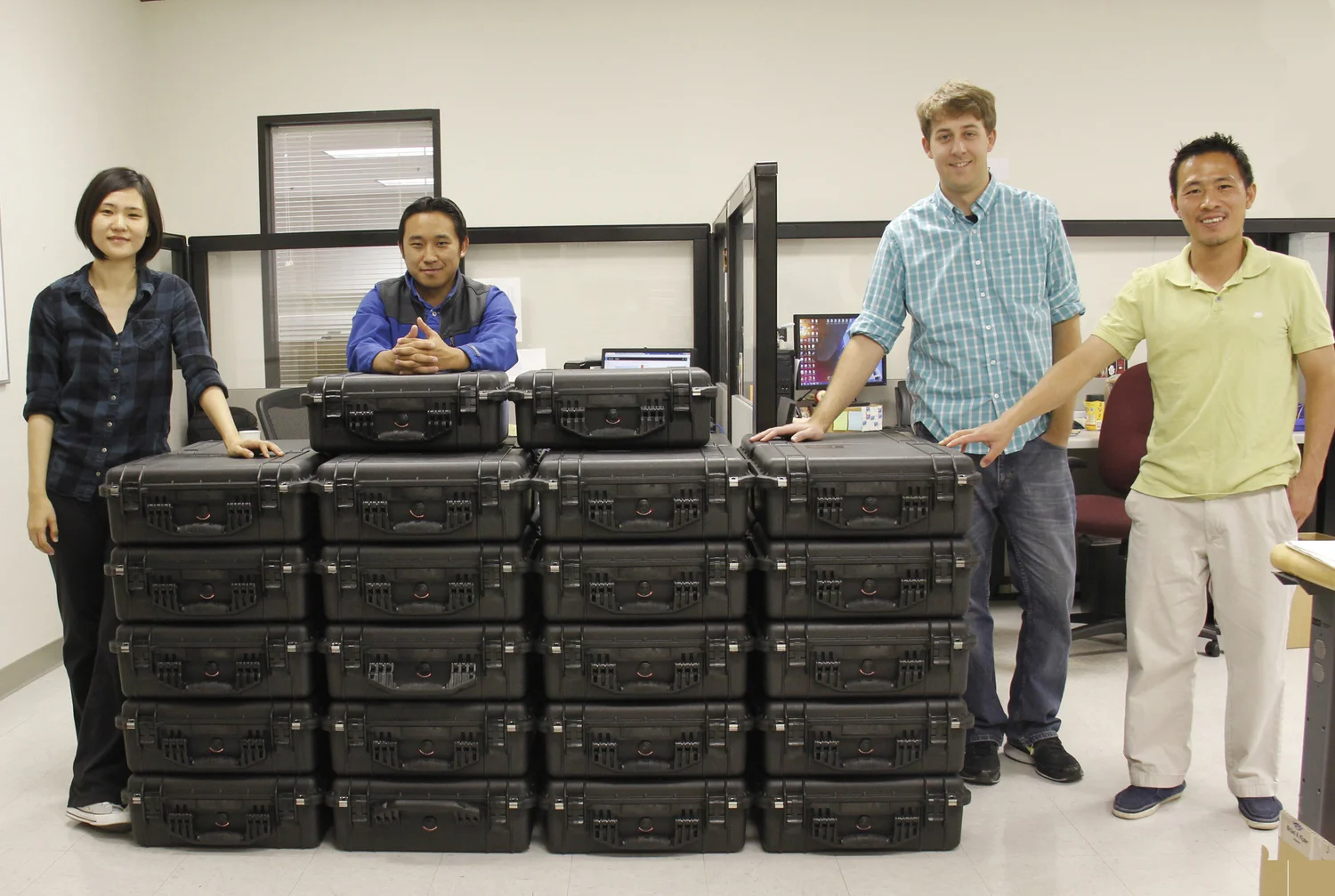
Crystal Instruments shipped over fifty CoCo-80 handheld vibration monitoring devices in the month of June 2015. Used for preventative maintenance, vibration testing, and machine monitoring, the flexible software of the CoCo-80 allows technicians to easily take data through customized applications.

The short answer is, “a lot!” DSA (dynamic signal analyzer) users will immediately be able to do more of what they already do, faster and easier. VCS (vibration control system) users will discover new and safer ways of testing products to requirement specifications.


Speed reducers and other gearboxes are common industrial components. Monitoring their case vibration with accelerometers is an effective means of detecting problems within. To effectively diagnose these important mechanical elements, you need to understand the geometric details of their construction. Most importantly, you need to know the arrangement of shafts and the number of teeth on every gear within your transmission.

The CoCo-80 was an ideal choice as a portable vibration data collector for monitoring the health of the rotating machinery, specifically, HVAC equipment. The CoCo-80 weighs in at only 3.5 lbs, features an intuitive interface, and is rugged enough to operate in extreme conditions.

One of the breakthrough features of the CoCo-80, Spider-80X, and Spider-81 is their outstanding dynamic range performance of 160 dBFS. This kind of performance has never before been achieved with such small, portable, and low cost devices. The main advantage of this high dynamic range is that it eliminates the need to adjust the input gain/range settings on the front end, thus simplifying the setup and measurement process. Both full scale 10 volt signals and very small microvolt signals are measured at the same time with no adjustments. This capability makes setup and testing more simplified in comparison with an instrument capable of only a lower dynamic range.

This updated PPT explains how GPS time stamping technology can help conduct dynamic signal measurements for both indoor and outdoor applications. Across CI products, CoCo-80x, GRS and Spider-80Xi all support accurate GPS timing.
Santa Clara, CA - November 25, 2025 — Crystal Instruments Corporation, a global leader in vibration testing, dynamic measurement, and data acquisition technologies, today announced that the United States Patent and Trademark Office has officially granted U.S. Patent No. 12,483,216 B2, titled “Data Recording Based on Dual ADC Architecture.” The patent is credited to inventor James Q. Zhuge, founder and CEO of Crystal Instruments.
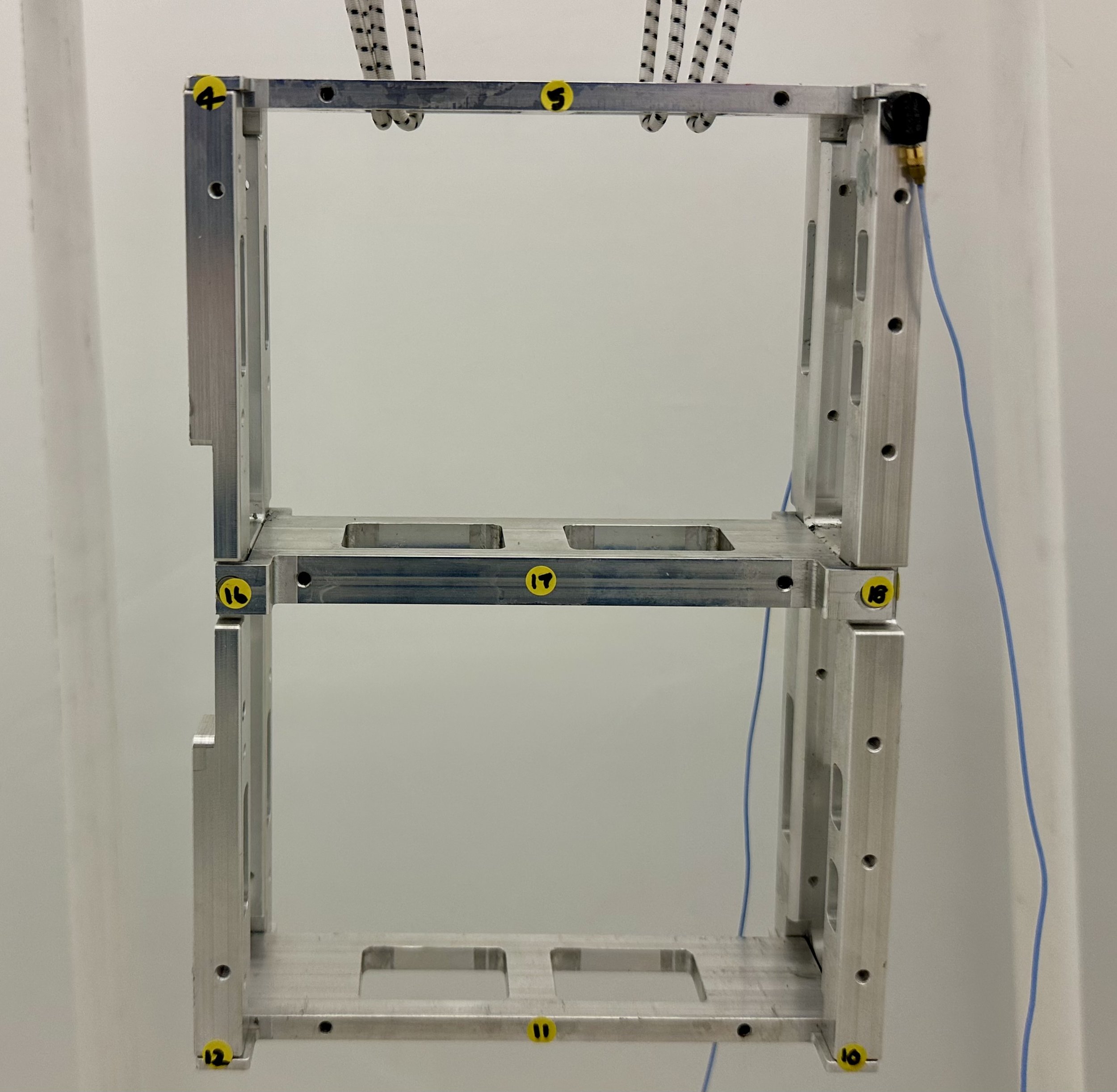
The case described in this article examines the modal characteristics of a satellite model acquired from performing experimental modal analysis. A hammer impact test was carried out with two teardrop uni-axial accelerometers (mounted in different directions) to study the modal behavior. The roving excitation method assists in completely avoiding the potential mass loading side effect produced by a roving response procedure. A hard tip was selected to excite the higher frequency modes.
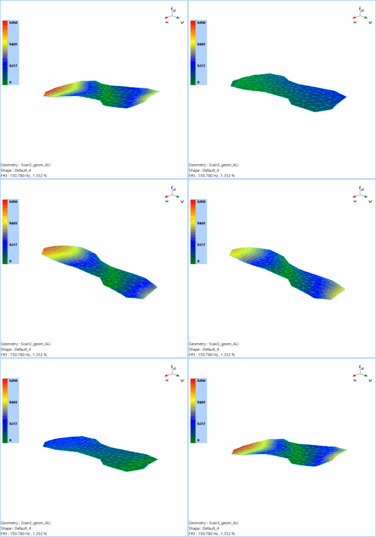
A violin was suspended on a frame to a imitate free-free boundary condition. Sentek Dynamics’ BT-100M shaker was used to excite a violin at the base of its front panel. Polytec’s PSV500 laser scanner was used to measure and acquire the data from the back panel of the violin. Crystal Instrument’s EDM Modal software processed and analyzed the dataset to provide the modal parameters of the violin.
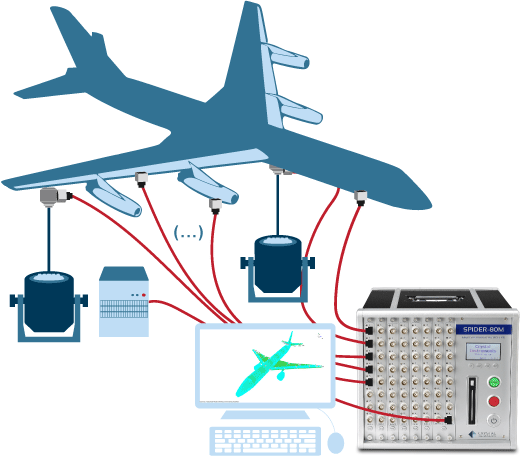
Ground Vibration Testing (GVT) includes the modal analysis of an aircraft and its sub-assembly components to analyze and detect any changes to their structural properties.

Crystal Instruments CoCo-80X handheld dynamic signal analyzer allows users to acquire measurements with unparalleled convenience in the field. The rugged design features a compact display for quick, easy, and accurate data recording and analysis. This powerful hardware system is now combined with Crystal Instruments patented GPS time synchronization technology, featuring a time accuracy of 100 ns. Users can now execute Operational Modal Analysis to study the dynamic characteristics of large structures such as bridges and buildings.

The rugged and intuitive CoCo-80X handheld system is now combined with Crystal Instruments’ patented GPS time synchronization technology (featuring a time accuracy of 100 ns) to further expand field measurement capabilities. Users are now able to execute Operational Modal Analysis using the handheld CoCo-80X to study the dynamic characteristics of large structures such as bridges and buildings.
Our team is thrilled to announce the 11.1 version of Engineering Data Management (EDM) software. Packed with a range of new features and improvements, this update is designed to elevate the user experience.

Seminar attendees learned everything from the basics of setting up a modal test to best practices in testing and in-depth modal theory. Modal testing variations included hammer excitation, SIMO shaker excitation, and MIMO shaker excitation.
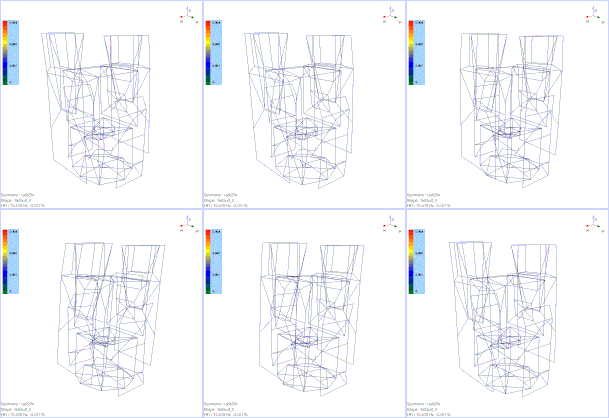
The Canadian Space Agency recently performed the Modal Analysis of a RADARSAT Satellite using five modal shakers. It is important to obtain the modal analysis of the unit-under-test because information about the natural frequencies, damping coefficients and mode shapes can be used to optimize its design and improve its structural behavior. The modal parameters about the mechanical properties of a structure help users understand its vibration characteristics during operating conditions.

The latest Experimental Modal Analysis Seminar was held from November 8-9, 2022 in Vancouver, British Columbia. Crystal Instruments partnered with Dalimar Instruments to present these modal training seminars in Canada. During the seminar, Dr. Peter Avitabile covered the basics of modal measurements, impact hammer tests, and shaker tests. The modal training seminar participants learned the theory behind techniques, performed measurements, and received hands-on training experience.

Dalimar Instruments and Crystal Instruments recently hosted an Experimental Modal Measurement and Analysis Seminar with Dr. Peter Avitabile from September 19th to September 20th in Montreal, Quebec. This joint seminar was held at Château Vaudreuil, an excellent facility with convenient amenities.

The rugged and portable CoCo hardware allows users to perform convenient measurement recordings and analysis in the field. Field operations are extended with the integration of EDM Modal software to provide a seamless modal analysis procedure.

Frequency Response Function (FRF) is widely used in structural testing. Accelerometers are typically used and the acceleration vs. excitation force is measured as FRFs.

Written in collaboration between PCB Piezotronics, Inc., Crystal Instruments, and Team Icewave
Icewave has an overall record of seven wins and six losses. Marc DeVidts, Icewave creator and team lead, believes some of the losses may have been due to the blade not impacting opponents effectively. Because of the power behind Icewave, some of these losses can be attributed to self-inflicted damage from its own rotating horizontal blade. The modal testing will be used to help increase striking effectiveness.

The experimental object in this modal test is a hood cross-flow fan with an overall structure that includes a roulette wheel, rotor frame and cross-flow blades that are composed of metal materials. The fan is hung using bungee cords to imitate free-free boundary conditions.

This article examines the acquisition of modal characteristics from a train wheel through experimental modal analysis. Train wheel and rail interactions are critical components worth studying. If the wheel-rail interactions while accelerating or braking excite any of the system modes during the ride operation, it can induce an undesirable effect upon the passengers’ ride and comfort. Hence, the execution of modal analysis is vitally important.

Modal testing provides a crucial verification link in structural design by verifying the accuracy of simulation results and determining the structural characteristics of the actual product.
Crystal Instruments is excited to announce the release of EDM 10.0, the latest software version for all Spider and CoCo products serving advanced and fundamental industries in addition to furthering academic advancements.

The Modal Data Acquisition (MDA) function for the CoCo-80X/90 allows users to conveniently acquire modal data in the field. The CoCo Testing Plan provides an overview of the measurement process and also provides the ability to customize the measurement entries.
This article describes a step-by-step process of the CoCo MDA function along with the CoCo Testing Plan feature. A brief overview of transferring the data from the CoCo to EDM Modal in order to post-process the data is also presented.
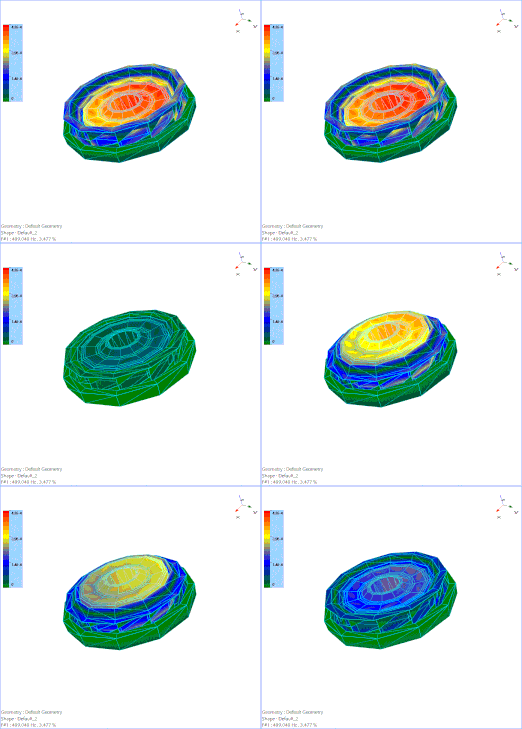
This article examines the acquisition of modal characteristics from a bullet train wheel by performing experimental modal analysis. The wheel vibrations affect the dynamics of the wheel-rail interactions. Understanding these vibration characteristics will help mitigate the vibration and noise at high speeds.

Oregon State University in Corvallis, OR recently purchased a 64-channel Spider-80SGi data acquisition system. Dr. Armin W. Stuedlein, professor of geotechnical engineering said the Spider DAQ will be used for studies on in-situ liquefaction and cyclic softening studies, performance of ground improvements, and testing of full-scale foundations.
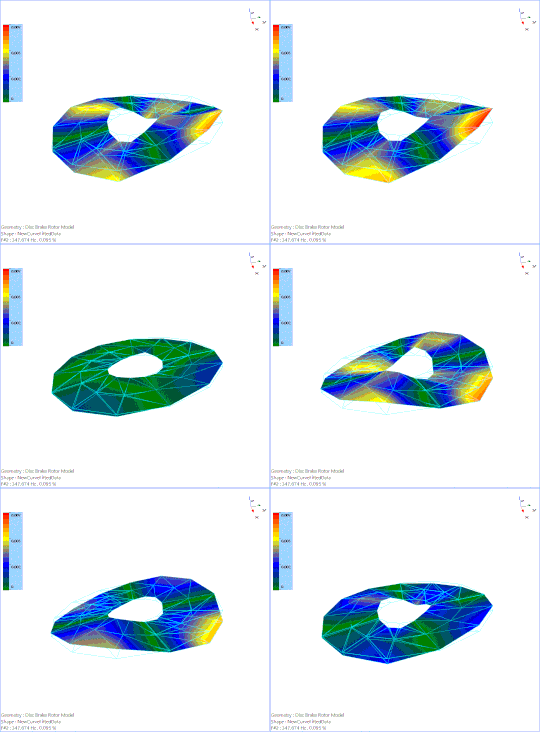
Executing the modal analysis of a structure is crucial in order to analyze the modal parameters of a test object. The natural frequencies, damping and mode shapes of the unit under test provides help to adjust the mechanical properties of a structure by optimizing the design and improving the structural behavior of the test unit. Consequently, modal analysis is a critical part of product development.

Structural measurements on infrastructure are growing in demand given the aging buildings, bridges, and dams that populate countries around the world. Structural measurements are not the only measurements needed for aging infrastructure, but they do play a role. In the structural measurement category, Crystal Instruments offers products to measure and analyze data for large structure measurements like the measurements done on the Vieux Emosson Gravity Dam.

In any multi-channel DAQ or vibration control system, where each channel is capable of measuring unique sensors, it is necessary to quantify how the channels are different from each other. The channels are designed identically, but component tolerances will cause differences between channels.
Founded in 1996, Crystal Instruments designs and manufactures instrumentation products for machine vibration monitoring, dynamic measurement, and environmental testing. The products are developed in Silicon Valley and our modern lab in North Carolina. Crystal Instruments products are thoroughly tested on a variety of vibration shakers and environmental chambers in our lab during the design phase to meet the extreme requirements of military and aerospace applications.

Watch Aakash Umesh Mange’s new video featuring the powerful Spider-80SG data acquisition system combined with the versatile EDM DSA software. This simple and efficient package for strain gage measurements can include the Spider-80Xi chassis, which scales up to 512 channels. Contact our team to schedule a demo or to learn more.

There are two steps for converting an analog signal into a digital signal – quantization in time (sampling) and quantization of amplitude. Any signal that goes through the sampling process is subject to the effect of aliasing. The common use of the word ‘alias’ is used to describe a false name or identity, which is similar to how the term is used in signal processing.

Watch Darren Fraser’s Multi-resolution Overview presentation from this year’s ESTECH 2021 conference. Viewers will receive a brief review followed by several practical application examples. The Multi-Resolution function is patented by Crystal Instruments.
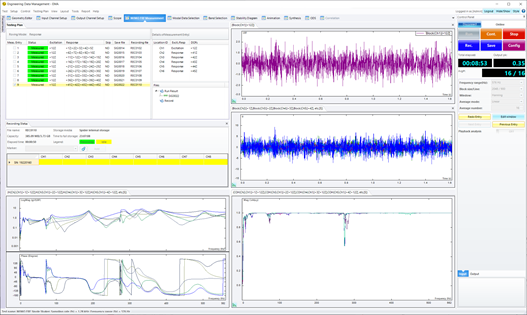
EDM Modal software provides the Playback Analysis feature which allows users to import recorded time signals and process measurement data to obtain the related spectrum signals. This feature allows users to carry out all the field measurements in one attempt before post-processing and analyzing the measured data in detail on a lab PC.
We recently republished a classic white paper about dynamic signal analysis.
Our team is thrilled to announce the 11.1 version of Engineering Data Management (EDM) software. Packed with a range of new features and improvements, this update is designed to elevate the user experience.
DSA is often referred to Dynamic Signal Analysis or Dynamic Signal Analyzer depending on the context. DSA uses various technologies for digital signal processing. Among them, the most fundamental and popular technology is based on the so-called Fast Fourier Transform (FFT). The FFT transforms the time domain signals into the frequency domain. To perform FFT-based measurements, it is important to understand the fundamental issues and computations involved.
The latest release of version 2.2 CoCo Software includes notable updates such as support for 1 hz resolution, an IEPE powered tachometer, Waterfall & Colormap signal reviews, and the ability to sync VDS user profiles on a CoCo device.
The auto-wake feature is a new and powerful function provided in EDM 10.0 software. This feature allows users to set up a wake-up alarm for Spiders to power on, perform a test, and power off. Users can upload up to 8 predefined tests and run these in Black Box mode (without a connection to a computer or network to run). This convenient mode allows users to acquire data autonomously or with little user intervention.
Some data acquisition applications will inevitability run into one of the most common problems of the information age: information overload. Today, modern DAQ systems, such as the highly versatile Crystal Instruments Spider product line, can store significant amounts of vibration data. Now, memory limitations are significant. However, sifting through large amounts of data in order to capture a small transient event is undesirable.
Crystal Instruments is excited to announce the release of EDM 10.0, the latest software version for all Spider and CoCo products serving advanced and fundamental industries in addition to furthering academic advancements.
Founded in 1996, Crystal Instruments designs and manufactures instrumentation products for machine vibration monitoring, dynamic measurement, and environmental testing. The products are developed in Silicon Valley and our modern lab in North Carolina. Crystal Instruments products are thoroughly tested on a variety of vibration shakers and environmental chambers in our lab during the design phase to meet the extreme requirements of military and aerospace applications.
There are two steps for converting an analog signal into a digital signal – quantization in time (sampling) and quantization of amplitude. Any signal that goes through the sampling process is subject to the effect of aliasing. The common use of the word ‘alias’ is used to describe a false name or identity, which is similar to how the term is used in signal processing.
Crystal Instruments is pleased to announce the release of EDM 9.1, the most reliable and powerful version available from Crystal Instruments.

The CoCo’s Save and Record functions are generally only discussed in the context of separate measurements. Although the Save and Record functions cannot be executed simultaneously, the CoCo is still able to store both the time waveform and FFT from the same set of original data. By exploiting the fact that FFT/block signals are always being buffered in the CoCo’s RAM, we can acquire the FFT signals while simultaneously recording the time waveforms to the SD card.
Featuring the highest sampling rate provided in the industry at 256 kHz. Handheld battery powered system with wired & wireless network options and 20V input range. Sync between multiple devices. Choose the convenient portable model or industrial model for permanent mounting.
The Spider-20H, Spider-20HE, and Spider-20i received a hardware upgrade to support an impressive 256 kHz samping rate on all 4 input channels. It is the highest sampling rate offered in the market of compact analyzers. The high sampling rate is especially beneficial for measuring high orders and transient capture in blast tests, pyroshock events, drop shock tests, crash tests, etc.
In addition to the high samping rate, the input range is expanded to 20V to capture larger signals.

Crystal Instruments EDM 9.0 release introduces new additions to the Spider product line featuring support for sampling rates up to 256 kHz.
The new Spider-80Hi and Spider-80Ci are scalable versions of the Spider system featuring the impressive new 256 kHz sampling rate. Recording can also be performed at sampling rates up to 256 kHz for all input channels, up to 512 channels per Spider system.
The compact, ultra-portable four channel version of the Spider has also been developed to support a 256 kHz sampling rate. Currently, three variations of the compact Spiders supporting the 256 kHz sampling rate are available: Spider-20H, Spider-20HE, Spider-20i.

Today’s engineering tools are the result of constant software development, but these developments aren’t always best for the end-user. Engineers who are heavily invested in their tools will be reluctant to switch to a new device. In a time where software is constantly changing, people don’t have the time to struggle with new software interfaces. Especially field technicians, whose job is to collect and analyze data, don’t like wasting time getting used to a new software interface. Their job is already complicated, and is only made worse with a complicated measurement device. If their tools are too complicated to use, engineers will look for a simpler solution.

There are often instances where it may be beneficial to add location information to your acquired data. With the CoCo-80X, these GPS signals can be acquired simultaneously with other measurements -- there is no need to carry a separate GPS device. The CoCo-80X’s large LCD and touch-screen interface makes it easy to use the analyzer and acquire data. All measurements are combined into a single test file, so there’s no need to manage files.
I’ve always wondered why some instruments in the market set their hardware input range to 10 V. Perhaps the hardware designer for these instruments possessed ten fingers and chose 10 V out of convenience. I can imagine their bosses eagerly approving the use of 10 V as well, because they too have ten fingers!

In response to industry demands for reliable vibration data collection and dynamic signal analysis with complex real-time processing, Crystal Instruments has developed the CoCo-80X. The instrument is equipped with a 7-inch LCD touchscreen, a dual-core DaVinci series 1GHz processor, and a wide-range of connection options including CAN Bus, USB 2.0, HDMI, Ethernet, and SD card. CoCo-80X is also Wi-Fi and GPS enabled.
The short answer is, “a lot!” DSA (dynamic signal analyzer) users will immediately be able to do more of what they already do, faster and easier. VCS (vibration control system) users will discover new and safer ways of testing products to requirement specifications.
One of the breakthrough features of the CoCo-80, Spider-80X, and Spider-81 is their outstanding dynamic range performance of 160 dBFS. This kind of performance has never before been achieved with such small, portable, and low cost devices. The main advantage of this high dynamic range is that it eliminates the need to adjust the input gain/range settings on the front end, thus simplifying the setup and measurement process. Both full scale 10 volt signals and very small microvolt signals are measured at the same time with no adjustments. This capability makes setup and testing more simplified in comparison with an instrument capable of only a lower dynamic range.
Santa Clara, CA - November 25, 2025 — Crystal Instruments Corporation, a global leader in vibration testing, dynamic measurement, and data acquisition technologies, today announced that the United States Patent and Trademark Office has officially granted U.S. Patent No. 12,483,216 B2, titled “Data Recording Based on Dual ADC Architecture.” The patent is credited to inventor James Q. Zhuge, founder and CEO of Crystal Instruments.

Pickleball noise is comprised of several interactions, one being the paddle impacting the ball and another being people cheering and shouting. The paddle impact noise is one of the issues the industry has faced, and some paddle manufacturers are claiming quiet noise characteristics of their paddles.
In this opportunity, we used the Crystal Instrument’s CoCo-80X to characterize the noise from several paddles for acoustic comparison. The equipment consisted of three (3) microphones mounted on an arch boom and seven specimens to be tested (including different paddles). The testing was done inside the MD Acoustics, LLC’s anechoic chamber at the facilities in Gilbert, AZ.

Acoustic Consultants are often tasked with analyzing the noise absorption in rooms, studio garages, and storage spaces. The primary challenge in this type of analysis is to find a dynamic signal analyzer with portability, high sampling rate functionality, and complex analysis.

Roam Robotics is a San Francisco-based company expanding human mobility with wearable robotics focused in three areas: recreation support, medical orthotics, and military applications.
Each application requires a thorough investigation to ensure user safety and comfort. Crystal Instruments is proud to provide the four channel Spider-20E dynamic signal analyzer for Roam to perform acoustic testing on their products.
NASA’s response to Crystal Instruments addressed items NASA found beneficial, items NASA wanted changed, and items NASA benchmark tested on the prototype units. The Crystal Instruments prototype GRS systems were delivered according to a contractual agreement and performed well when tested for each listed specification with some areas of improvement.

Aerospace hardware (i.e., space crafts) require high intensity acoustic level testing, which is usually accomplished inside a RATF (reverberant acoustic test facility). The acoustic noise level inside the RATF at NASA Plum Brook test station can reach 163 dB, which is the highest level among all RATFs around the world.
Crystal Instruments is excited to announce the release of EDM 10.0, the latest software version for all Spider and CoCo products serving advanced and fundamental industries in addition to furthering academic advancements.

Total Harmonic Distortion (THD) is a critical specification for signal analyzers and electronic components. This application note will provide a description of harmonics and harmonic distortion that is both brief and comprehensive.

Spectral flatness is a way to quantify the deviation of a passband from being perfectly flat across the frequency spectrum. Like most specifications, the behavior of signals measured in the passband is not ideal and we want to quantify the deviation from the ideal case.

A manufacturer of laptop fans was suffering from the results of slow production testing. The testing capacity was limited by testing products with manually operating instruments in a quiet room. Crystal Instruments provided the easy-to-use Spider hardware and EDM software package as a solution to significantly improve their production testing.
Founded in 1996, Crystal Instruments designs and manufactures instrumentation products for machine vibration monitoring, dynamic measurement, and environmental testing. The products are developed in Silicon Valley and our modern lab in North Carolina. Crystal Instruments products are thoroughly tested on a variety of vibration shakers and environmental chambers in our lab during the design phase to meet the extreme requirements of military and aerospace applications.
There are two steps for converting an analog signal into a digital signal – quantization in time (sampling) and quantization of amplitude. Any signal that goes through the sampling process is subject to the effect of aliasing. The common use of the word ‘alias’ is used to describe a false name or identity, which is similar to how the term is used in signal processing.


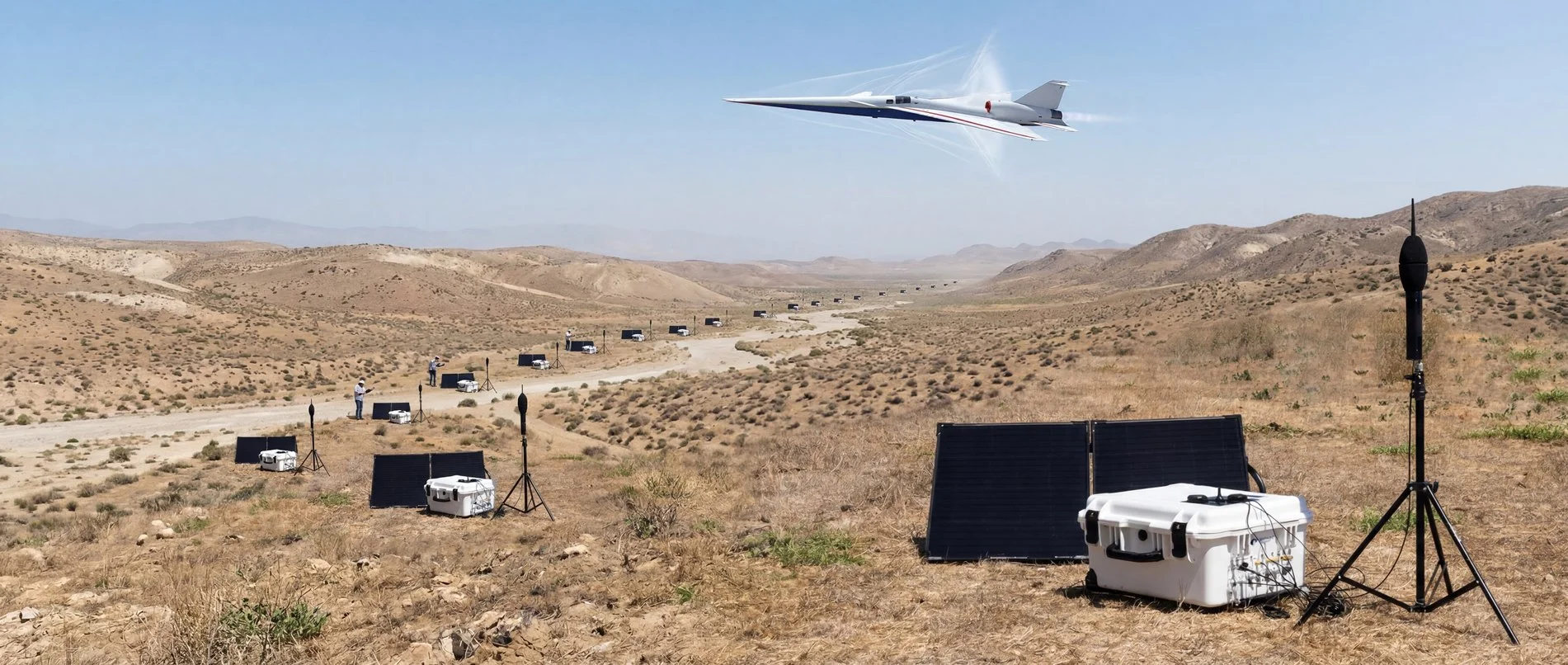
NASA will use the Crystal Instruments Ground Recording System, or CI-GRS for short, to gather data related to sonic booms, and in the future, the X-59’s quiet sonic thumps. A feature of the CI-GRS will be the ability for NASA to install custom software and algorithms tailored to various specialized operations for real-time analysis of sonic thumps. - Read article on NASA website
Crystal Instruments is pleased to announce the release of EDM 9.1, the most reliable and powerful version available from Crystal Instruments.

Paradise Fireworks, the only black-powder fireworks manufacturer in Canada, recently rented a Spider-20E signal analyzer for some very unique tests. As a licensed explosion testing site in Canada, Paradise Fireworks was called upon to do some important blast testing for natural gas lines that lie beneath the small structures generally found in residential backyards. The goal of these tests was to define and quantify the dangers associated with having small structures (such as hot tubs and sheds) positioned above the junctions in these gas lines. To do this, Paradise would take pressure measurements from each blast using our high precision Spider-20E signal analyzer hardware in conjunction with our EDM DSA software.
Featuring the highest sampling rate provided in the industry at 256 kHz. Handheld battery powered system with wired & wireless network options and 20V input range. Sync between multiple devices. Choose the convenient portable model or industrial model for permanent mounting.
The Spider-20H, Spider-20HE, and Spider-20i received a hardware upgrade to support an impressive 256 kHz samping rate on all 4 input channels. It is the highest sampling rate offered in the market of compact analyzers. The high sampling rate is especially beneficial for measuring high orders and transient capture in blast tests, pyroshock events, drop shock tests, crash tests, etc.
In addition to the high samping rate, the input range is expanded to 20V to capture larger signals.
Crystal Instruments EDM 9.0 release introduces new additions to the Spider product line featuring support for sampling rates up to 256 kHz.
The new Spider-80Hi and Spider-80Ci are scalable versions of the Spider system featuring the impressive new 256 kHz sampling rate. Recording can also be performed at sampling rates up to 256 kHz for all input channels, up to 512 channels per Spider system.
The compact, ultra-portable four channel version of the Spider has also been developed to support a 256 kHz sampling rate. Currently, three variations of the compact Spiders supporting the 256 kHz sampling rate are available: Spider-20H, Spider-20HE, Spider-20i.

The CoCo-80X’s latest software release includes a new signal analysis project for Sound Power applications. The Sound Power CSA features a graphic interface to show the test point status. There are multiple test room types and microphone arrangements. When the test is complete, a report is generated.

Noise Criteria (NC) curves are primarily used to rate indoor noise levels. It is important that the background noise levels are within acceptable limits to ensure optimal speech communication for structures ranging from residences and offices to hospitals and schools.
Today’s engineering tools are the result of constant software development, but these developments aren’t always best for the end-user. Engineers who are heavily invested in their tools will be reluctant to switch to a new device. In a time where software is constantly changing, people don’t have the time to struggle with new software interfaces. Especially field technicians, whose job is to collect and analyze data, don’t like wasting time getting used to a new software interface. Their job is already complicated, and is only made worse with a complicated measurement device. If their tools are too complicated to use, engineers will look for a simpler solution.
I’ve always wondered why some instruments in the market set their hardware input range to 10 V. Perhaps the hardware designer for these instruments possessed ten fingers and chose 10 V out of convenience. I can imagine their bosses eagerly approving the use of 10 V as well, because they too have ten fingers!
In response to industry demands for reliable vibration data collection and dynamic signal analysis with complex real-time processing, Crystal Instruments has developed the CoCo-80X. The instrument is equipped with a 7-inch LCD touchscreen, a dual-core DaVinci series 1GHz processor, and a wide-range of connection options including CAN Bus, USB 2.0, HDMI, Ethernet, and SD card. CoCo-80X is also Wi-Fi and GPS enabled.

Anyone who has lived or worked at or near a construction site is familiar with the sound of pile driving, or the mechanical driving of specialized poles into the earth to provide foundational support for buildings. The noise and vibrations of the work may continue at high decibels over a prolonged period of time.
The Spider series of dynamic signal analyzers by Crystal Instruments welcomes its newest product, the Spider-20, which at 5 x 4 inches and 18 ounces is the most compact instrument in the product line.
The short answer is, “a lot!” DSA (dynamic signal analyzer) users will immediately be able to do more of what they already do, faster and easier. VCS (vibration control system) users will discover new and safer ways of testing products to requirement specifications.
Santa Clara, CA - November 25, 2025 — Crystal Instruments Corporation, a global leader in vibration testing, dynamic measurement, and data acquisition technologies, today announced that the United States Patent and Trademark Office has officially granted U.S. Patent No. 12,483,216 B2, titled “Data Recording Based on Dual ADC Architecture.” The patent is credited to inventor James Q. Zhuge, founder and CEO of Crystal Instruments.
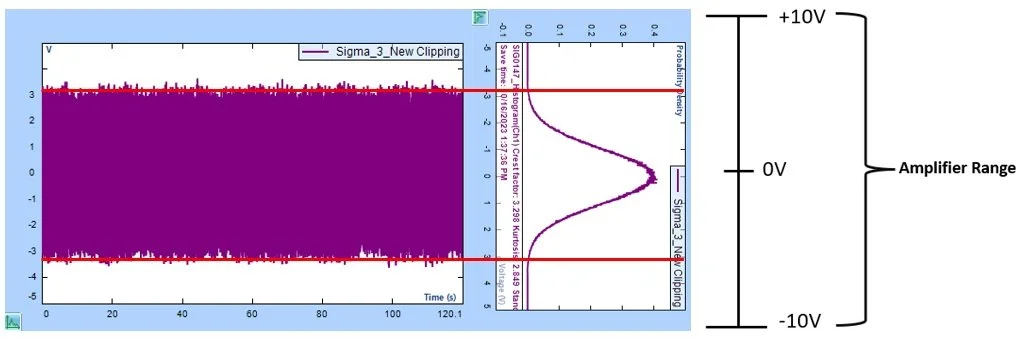
Why Sigma Clipping?
This feature prevents amplifiers from tripping when the input ranges of an amplifier are lesser than the drive signal required to achieve a target GRMS.

The Fatigue Damage Spectrum (FDS) serves as a pivotal tool in the assessment of structural integrity, portraying the relationship between damage and natural frequency across the frequency domain. Its utility extends to testing laboratories, empowering them to craft precise Random vibration test profiles by analyzing acceleration vibration data derived from real-world environments. By using the FDS, these labs can accurately delineate the damage experienced by structures under dynamic loads, facilitating the development of robust testing protocols essential for ensuring product reliability and safety.
The case described in this article examines the modal characteristics of a satellite model acquired from performing experimental modal analysis. A hammer impact test was carried out with two teardrop uni-axial accelerometers (mounted in different directions) to study the modal behavior. The roving excitation method assists in completely avoiding the potential mass loading side effect produced by a roving response procedure. A hard tip was selected to excite the higher frequency modes.

Shaker applications involve the use of many attachments to the shaker’s armature. Head expanders, fixtures, adapters, and devices under test (DUT’s), all attach to the shaker for the testing process. While it is common to simply consider the added mass of these components, their deformation during vibration can also have a significant impact on the vibrations experienced at any certain point of interest.

Crystal Instruments is excited to announce the release of our new VCS software module, Blade Fatigue Testing (BFT). Fatigue testing of blades is a critical step in mechanical design, whether it be turbine, compressor, or even propeller blades.

VCS includes a full range of functions to create/run tests, calculate signals, and analyze/report/export data. Some users may not require all these tests and may prefer a lighter, more signal focused experience. These users can now use our new software program, Signal Viewer.
Our team is thrilled to announce the 11.1 version of Engineering Data Management (EDM) software. Packed with a range of new features and improvements, this update is designed to elevate the user experience.

Crystal Instruments Multi-Exciter Single- Axis (MESA) vibration test control allows users to closely replicate real-world applications according to the complex and multi-DOF nature of real vibrations. MESA vibration testing is most commonly used with higher forces on each axis and with long vertical dimensional testing units. Crystal Instruments provides the highest quality and technologically advanced solutions for MESA vibration testing and recently provided comprehensive MESA testing on a dual 300 KN shaker system at an industrial environmental testing lab.
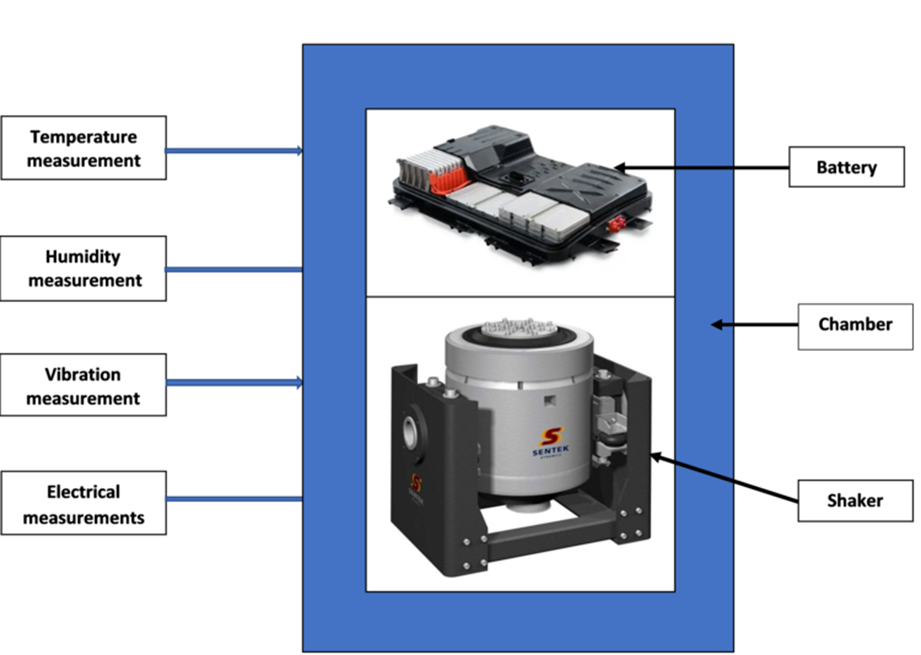
In the evolving world of transportation, Electric Vehicles (EV) have become a superior choice for consumers, resulting in a rising demand for automobile manufactures to produce safe, reliable, and efficient EV’s. Along with the higher production volume comes rigorous standards for testing, specifically when it comes to the crucial components, such as battery packs.

Users can monitor the status of environmental tests (vibration, temperature, humidity) operating in EDM VCS, measurements taken in EDM DSA, and remotely located tests by implementing MQTT in EDM.

Watch our new Ground Vibration Testing video with narration by Walter Kemphaus, Product Manager. To learn more about Ground Vibration Testing, visit: https://www.crystalinstruments.com/ground-vibration-test

The new Transducer Calibration Software helps ensure accurate vibration test measurements by simplifying the calibration process, saving time, and confirming that measurements are performed within specifications.
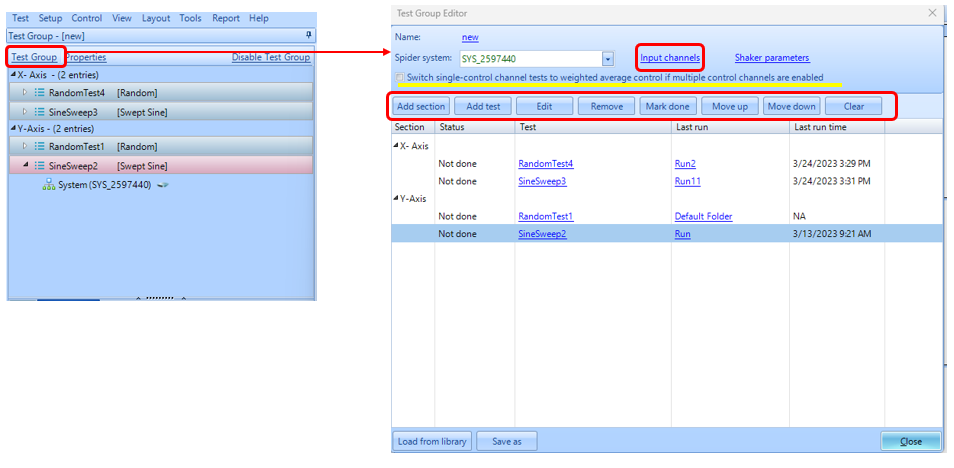
This article discusses a new EDM 11.0 release feature called Test Group, which organizes multiple tests into sections, to run in sequence, and shares test configurations. EDM allows users to configure and re-use the same test for the same or different objects. All configurations and test parameters are applied to a single test. Settings can be loaded and applied to a new test from a saved library. Test configurations are easily shared by sharing just the test file.
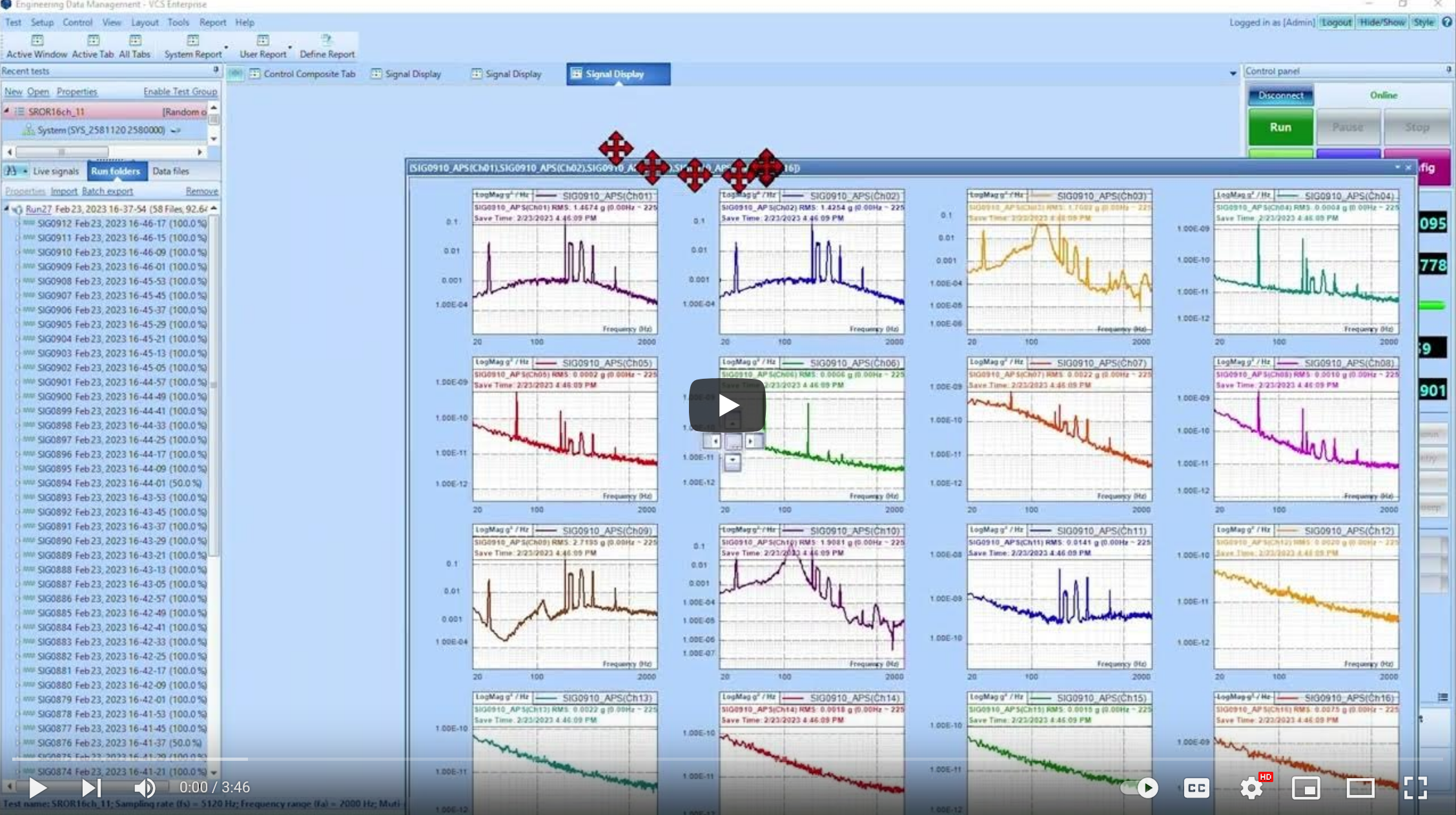
Updated signal display features in Engineering Data Management (EDM) software, version 11.0 allows users to quickly add many signals in stack plots and individual plots.

This article discusses the concept and implementation of a unique safety feature for environmental testing with a focus on Multiple Exciter Single Axis (MESA) vibration testing.

This paper concentrates on the MESA Sine on Random control per MIL STD 810H, method 514.8, annex D, 2.3 category 14. This category governs Sine on Random control for helicopters.
Crystal Instruments designed and released the Spider-80M Multiple-Exciter Single-Axis (MESA) vibration controller in 2018. Further details regarding the MESA testing system are available on the Sentek Dynamics website. Detailed product specifications may be requested from the Crystal Instruments team.

Shock Response Spectrum (SRS) testing is commonly required for defense applications. The UUTs are tested under significantly high levels of shock waveforms.
The concept of SRS predictive notching was proposed a few years ago to fully test UUTs and ensure their survival experiencing real-world vibrations while protecting it from over testing.
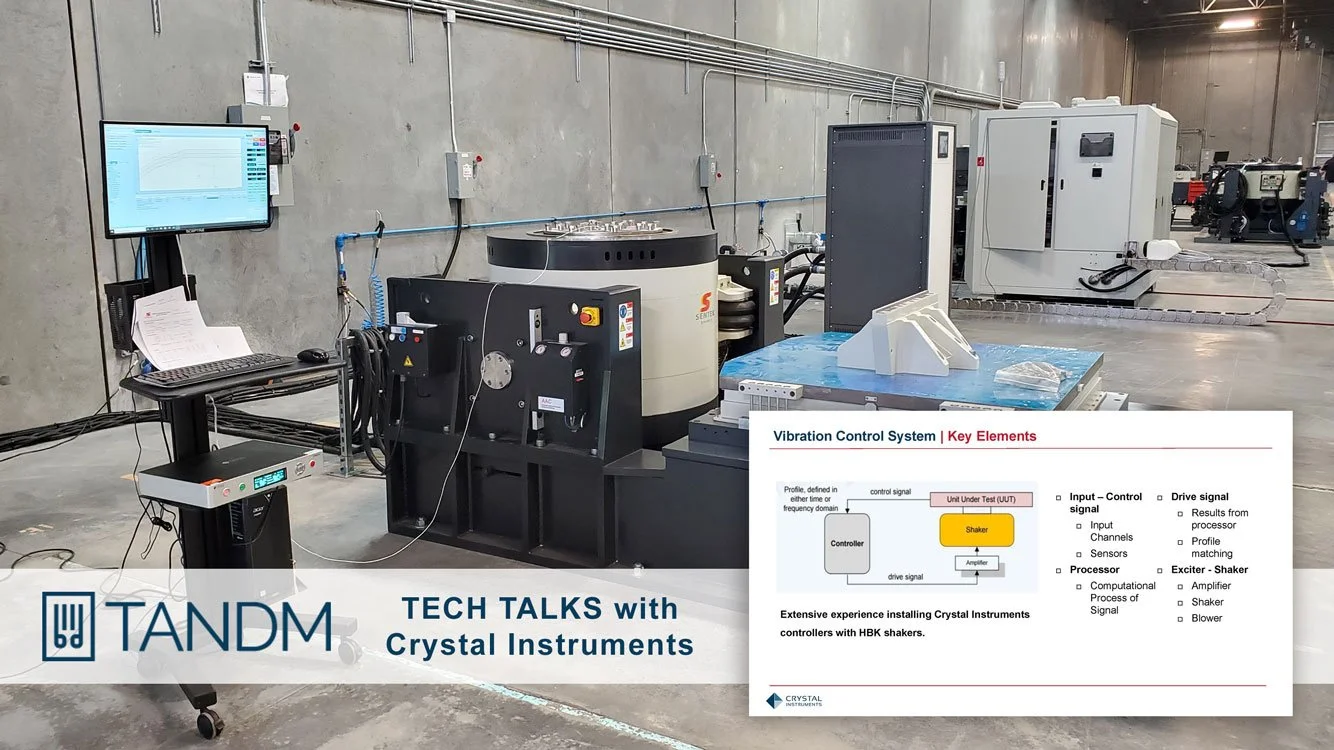
Technical sessions (Tech Talks) exploring Electrodynamic Vibration Testing technology were organized by Crystal Instruments partner TANDM in South Africa at Cape Town Hazendal Wine Estate, Stellenbosch on March 15, 2022 and at Pretoria, Future Africa, University of Pretoria on March 17, 2022.

Turbine engines are the power sources of aircrafts. The reliability of turbine engines is crucial when ensuring aircraft safety. Failure analysis of turbine engines reveals the catastrophic damage a turbine blade failure can cause to the engine, depending on the location of the blade. Turbine blade fatigue testing can help engineers investigate and improve the material and design of turbine blades.

A Ground Vibration Test (GVT) involves carrying out modal analysis of an aircraft and its sub-assembly components to analyze and detect any changes in their structural properties. The modal parameters determined through this testing are used to validate analytical models. The modal characteristics are also used to predict the flutter of the aircraft in order to create a safe flight envelope before flight operation. Thus, GVT is a crucial process in the design and development cycle of aircrafts.

This paper discusses the usage and unique features of Multiple-Exciter Single-Axis (MESA) control with Crystal Instruments vibration controller.
MESA is a type of multiple exciter setup with all exciters arranged along a single axis. The goal is to combine the excitation forces and dimensional capabilities from multiple exciters to test a long and/or large Unit Under Test. MIL-STD-810G Method 527 discusses the terminology involving single and multiple exciter testing configurations.

Introduction
The SRS Synthesis test aims to create a time profile shock pulse whose Shock Response Spectrum matches a profile defined by the customer.

Video Capture is a new EDM Extension that works with IP cameras for vibration test monitoring and data acquisition. This feature provides real-time video monitoring and video or photo recording of the test process or any object of interest along with data acquisition. The Video Capture feature is available in EDM VCS (vibration control system) and EDM DSA (dynamic signal analysis) software for the Spider platform. Dome or box type IP cameras using the ONVIF protocol are supported by the video capture feature.
Crystal Instruments is excited to announce the release of EDM 10.0, the latest software version for all Spider and CoCo products serving advanced and fundamental industries in addition to furthering academic advancements.
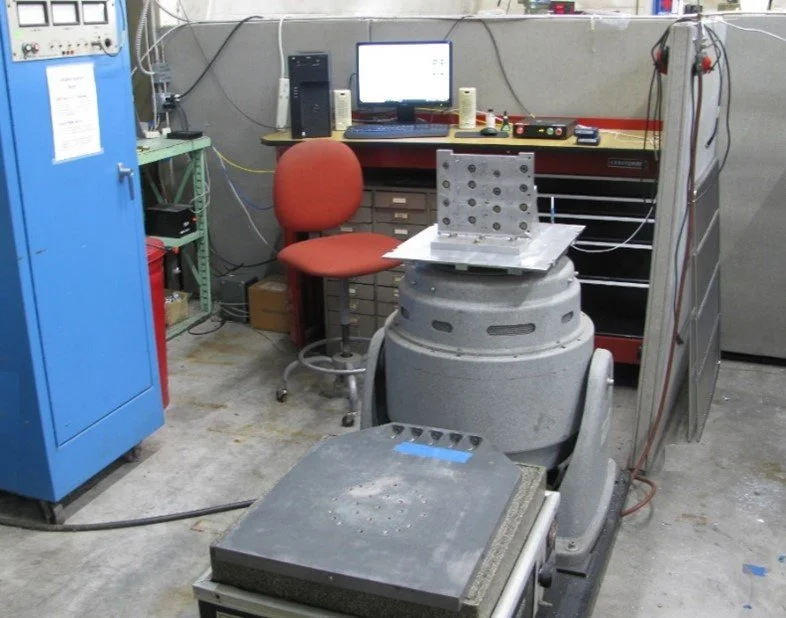
Recently TelGaAs has modernized its vibe and shock capabilities. With the addition of Spider-81B vibe controller, we can now quickly develop, simulate, execute, and report our vibe & shock profiles.

Watch the new Spider-80Ti video produced by Aakash Umesh Mange, Application Engineer at Crystal Instruments. Narration is provided by Walter Kemphaus, Application Engineer at Crystal Instruments.
The Spider-80Ti is a front-end from the Spider-80Xi hardware platform that enables temperature measurement. Spider-80Ti supports temperature measurements from Thermocouples and RTD (Resistance Temperature Detector) sensors.

A typical vibration test often requires running the test up to 2000 Hz or beyond. This is a tremendous challenge because the resonant and anti-resonant frequencies are often only a few hundred Hz. This article analyzes the obstacles to running a sine test over a high frequency range, including the dynamic characteristics of the Unit Under Test (UUT) and fixtures, the control dynamic range of the vibration controllers, and the sensor mounting locations. Several strategies and recommendations are then discussed with results.
Structural measurements on infrastructure are growing in demand given the aging buildings, bridges, and dams that populate countries around the world. Structural measurements are not the only measurements needed for aging infrastructure, but they do play a role. In the structural measurement category, Crystal Instruments offers products to measure and analyze data for large structure measurements like the measurements done on the Vieux Emosson Gravity Dam.

On January 17, 2021, Virgin Orbit successfully reached orbit with LauncherOne and deployed 10 CubeSats into Low Earth Orbit for NASA. Prior to the launch, the engineers at Virgin Orbit performed extensive vibration testing using Crystal Instruments vibration controllers with hundreds of channels. A Virgin Orbit dynamics engineer confirmed that “the Spider controllers played an important role in our successful launch,”
Video Capture is a new EDM Extension that works with IP cameras for vibration test monitoring and data acquisition. This feature provides real-time video monitoring and video or photo recording of the test process or any object of interest along with data acquisition. The Video Capture feature is available in EDM VCS (vibration control system) and EDM DSA (dynamic signal analysis) software for the Spider platform. Dome or box type IP cameras using the ONVIF protocol are supported by the video capture feature.
Crystal Instruments is excited to announce the release of EDM 10.0, the latest software version for all Spider and CoCo products serving advanced and fundamental industries in addition to furthering academic advancements.

The common-mode rejection ratio (CMRR) specification defines how well a differential amplifier rejects common-mode signals. A common-mode signal is the same (common) to both conductors in a typical two conductor connection (signal conductor and ground conductor).
Founded in 1996, Crystal Instruments designs and manufactures instrumentation products for machine vibration monitoring, dynamic measurement, and environmental testing. The products are developed in Silicon Valley and our modern lab in North Carolina. Crystal Instruments products are thoroughly tested on a variety of vibration shakers and environmental chambers in our lab during the design phase to meet the extreme requirements of military and aerospace applications.
There are two steps for converting an analog signal into a digital signal – quantization in time (sampling) and quantization of amplitude. Any signal that goes through the sampling process is subject to the effect of aliasing. The common use of the word ‘alias’ is used to describe a false name or identity, which is similar to how the term is used in signal processing.

On October 18th, 2020, a Bengkulu power plant in Western Sumatra Island successfully deployed a Power System Stabilizer (PSS) System and completed leading phase tests for Unit #1 and Unit #2 Generators, first of its kind in Indonesia.
The success of this project is a milestone for Indonesian power industry. The State Grid Corporation of Indonesia (PLN) highly praised the accomplishments of the engineering firm contracted to perform this test using Crystal Instruments’ CoCo-80 analyzer, and later awarded the firm with long term contracts.

LabVIEW is a visual programming workbench provided by National Instruments. It is used in a variety of applications for distributed testing, measurement, and control systems. When combined with powerful data acquisition systems like Crystal Instruments Spider systems, it can accept a wide range of inputs from a wide range of sensors to perform real time spectral processing. This combination also enables the deployment of large scale custom industrial and production systems.

Stability is an important part of ensuring operability of power generation systems. Large transients can cause power systems to become unstable and can eventually lead to blackouts. Power systems need to be designed to withstand large disturbances and maintain stability under changing operating conditions. Devices such as the generator automatic voltage regulator (AVR) and power system stabilizer (PSS) are widely used to manage these system instabilities. These control devices can be attached to power generation systems to help improve stability.
There are two steps for converting an analog signal into a digital signal – quantization in time (sampling) and quantization of amplitude. Any signal that goes through the sampling process is subject to the effect of aliasing. The common use of the word ‘alias’ is used to describe a false name or identity, which is similar to how the term is used in signal processing.