Amplitude Precision and Linearity
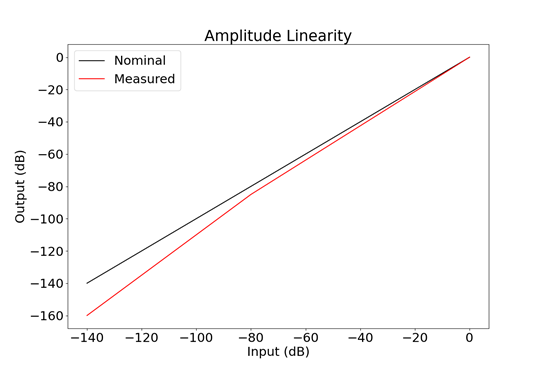
Amplitude precision is a simple specification that quantifies a channel’s amplitude error. The error is the difference between the nominal input amplitude and the channel’s measured amplitude.
Amplitude linearity is a way to specify the precision over a range of nominal input amplitudes. Precision typically depends on the input amplitude, and when just one number is provided for the amplitude precision specification, it is usually at 1 kHz and 1 V.
Read More
Crystal Instruments Receives US Patent for Vibration Visualization
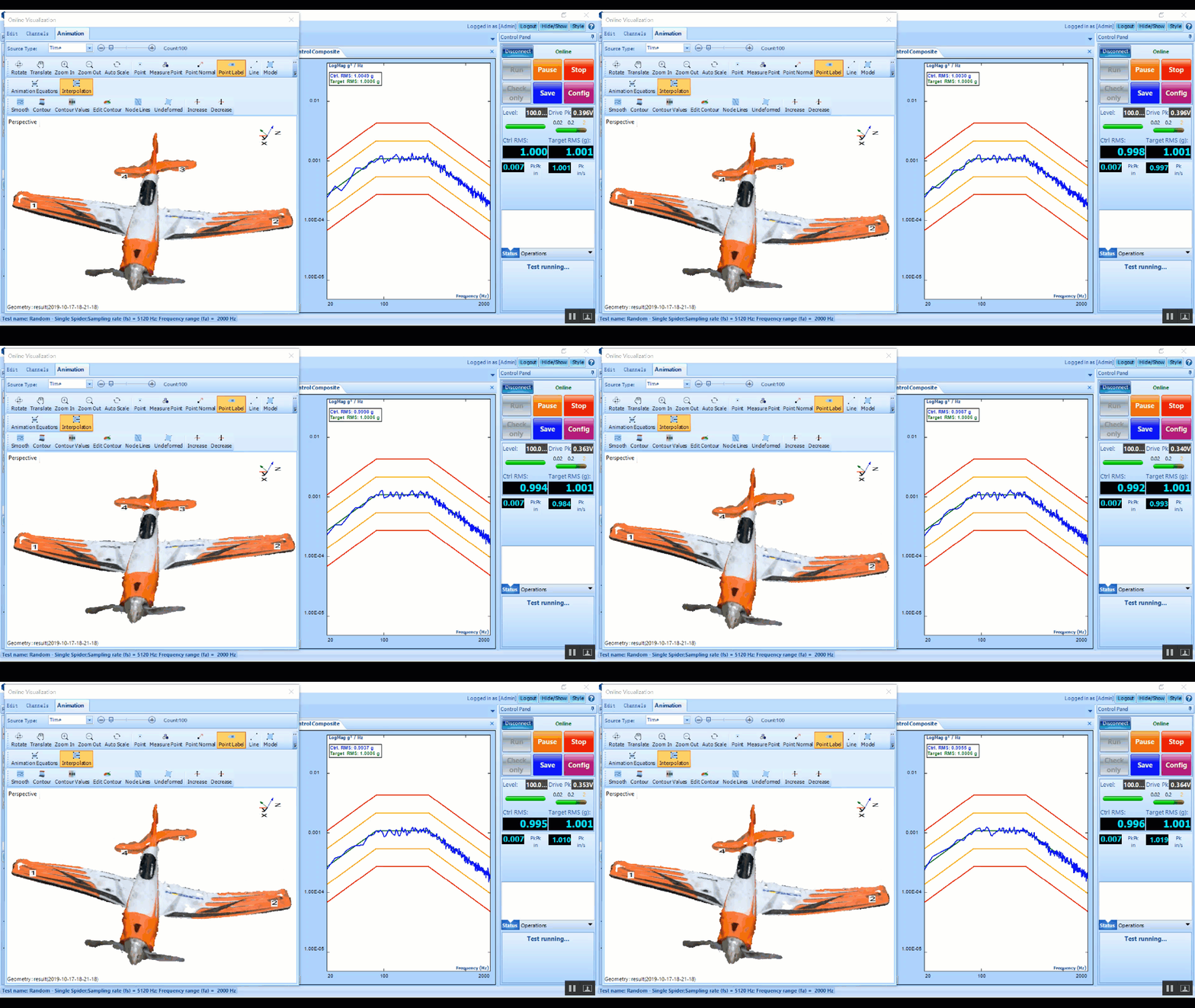
The United States Patent & Trademark Office awarded U.S. Patent No. 11,287,351 B2 for Vibration Visualization with Real-Time and Interpolation Features to Dr. James Zhuge (CEO), Dr. Jeff Zhao (Senior Product Manager), and Aakash Umesh Mange (Senior Application Engineer) on March 29, 2022.
Read More
Modal Analysis of Train Brake Disc Using EDM Modal
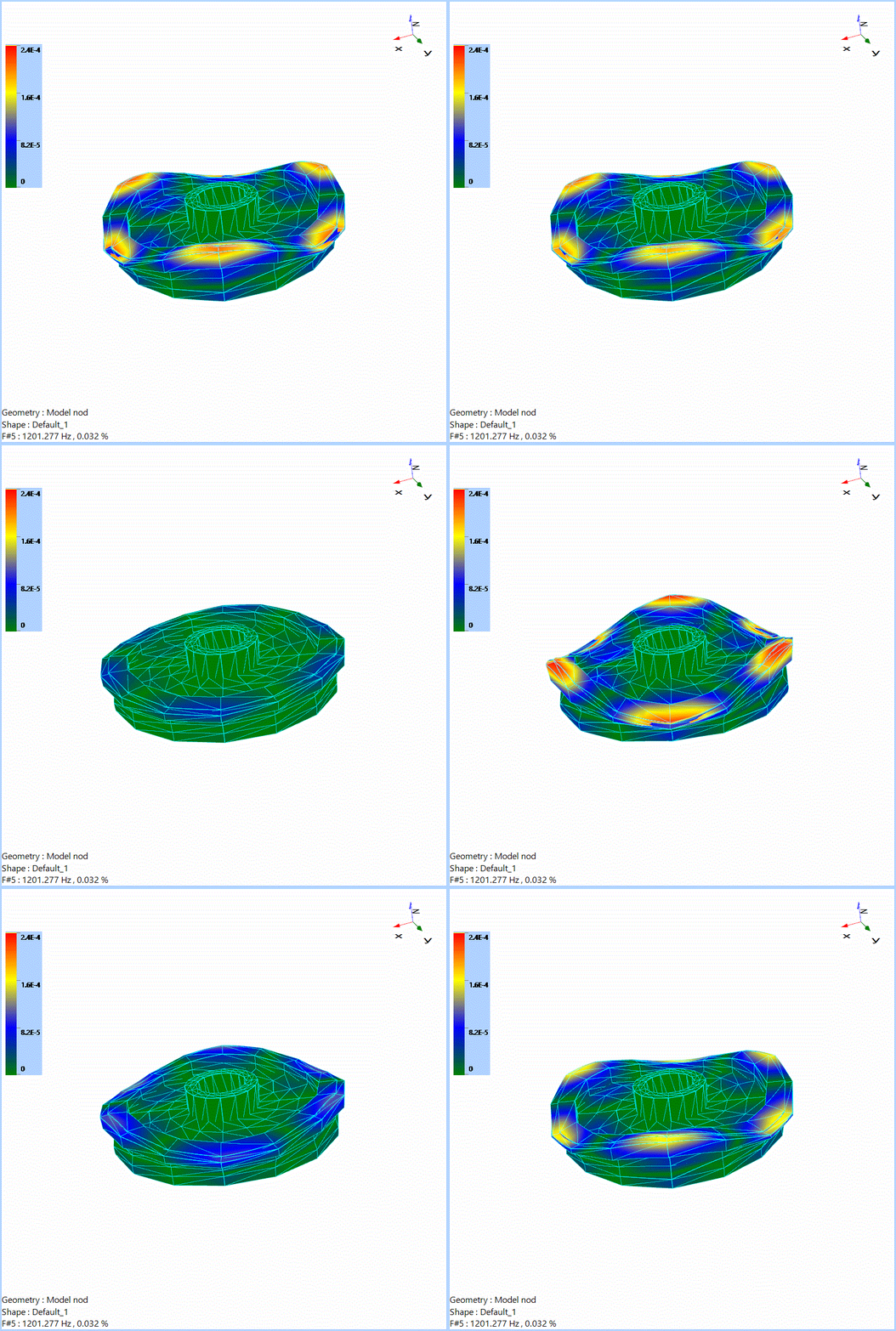
Modal testing verifies the accuracy of simulation results and determines the structural characteristics of various products. The following test designates a train brake disc as the test object. The modal parameters and mode shape of the train are studied and analyzed. The test piece is shown in the following figure.
Read More
Modal Analysis of MRI QBC Carrier Using EDM Modal
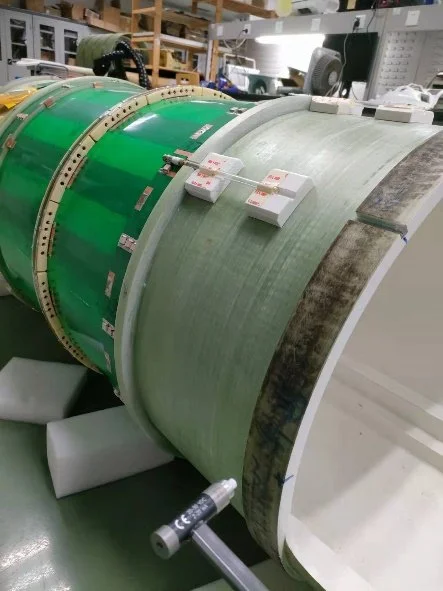
The experimental object undergoing modal analysis in this paper is a medical MRI QBC carrier structure, which is used to support patients laying in beds. The entire carrier is comprised of FRP composite material, and a thin board sheet installed with chips, capacitors, resistors, and other components is adhered in the middle section. For the experimental modal test, the carrier is hung using elastic ropes to imitate free-free boundary conditions.
Read More
Modal Analysis of Locomotive Wheel Using EDM Modal
This article examines the acquisition of modal characteristics from a train wheel through experimental modal analysis. Train wheel and rail interactions are critical components worth studying. If the wheel-rail interactions while accelerating or braking excite any of the system modes during the ride operation, it can induce an undesirable effect upon the passengers’ ride and comfort. Hence, the execution of modal analysis is vitally important.
Read More
Modal Analysis of Baseball Bat Using EDM Modal
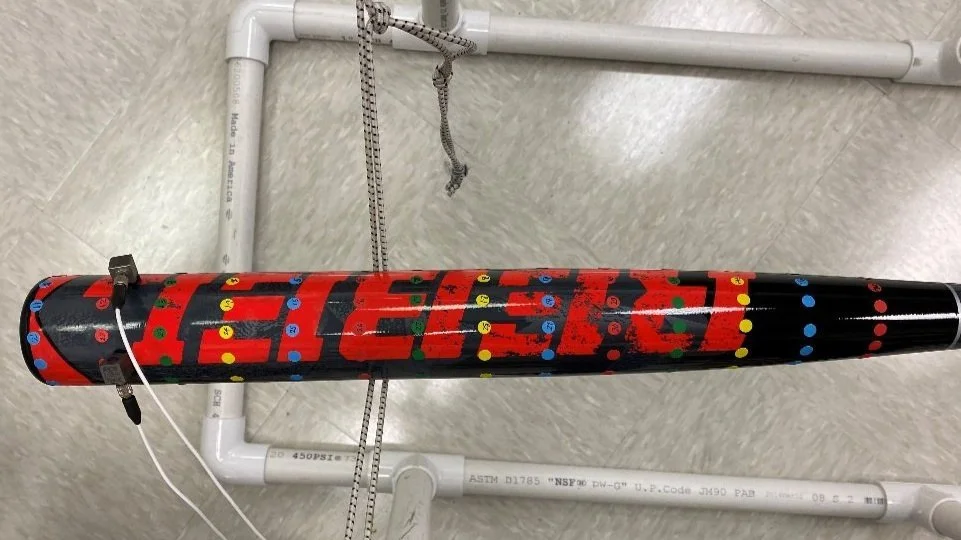
Modal analysis provides important information about the natural frequencies, damping coefficients and mode shapes of a test unit to optimize its design and improve its structural behavior. The modal parameters and mechanical properties of a structure helps users understand its vibration characteristics in operating conditions.
Read More
Signal Explorer
Signal Explorer allows users to easily compare signals from the same channel in different files. This software is a small .exe file included with EDM installation media and is available for download on the Crystal Instruments support site. No installation is needed. Just run it and load the folder containing your data files.
Read More
Modal Survey of Engine
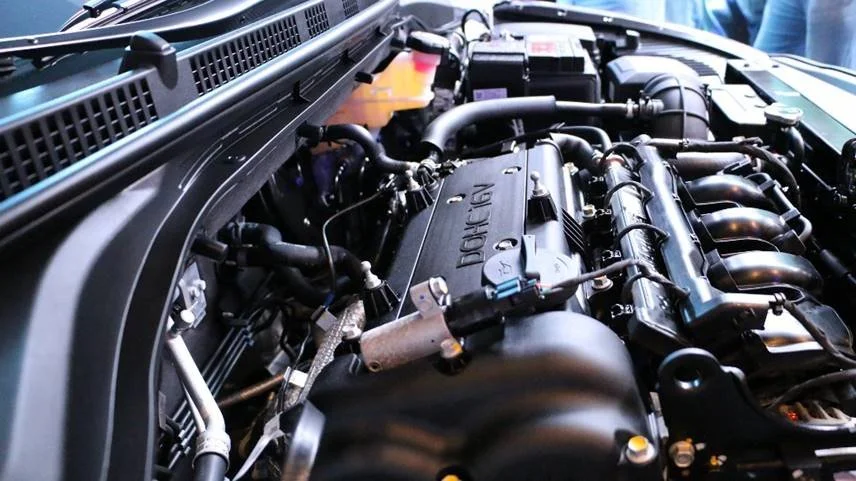
It is crucial to ensure that none of the engine components have any resonances that lie within the optimal rpm operation range. If any of the parts have certain structural dynamics in the range of operation, then the vibration and noise particularly at resonant frequencies can be dangerous and unpleasant.
Read More
Understanding Noise with Crystal Instruments Dynamic Measurement Solutions
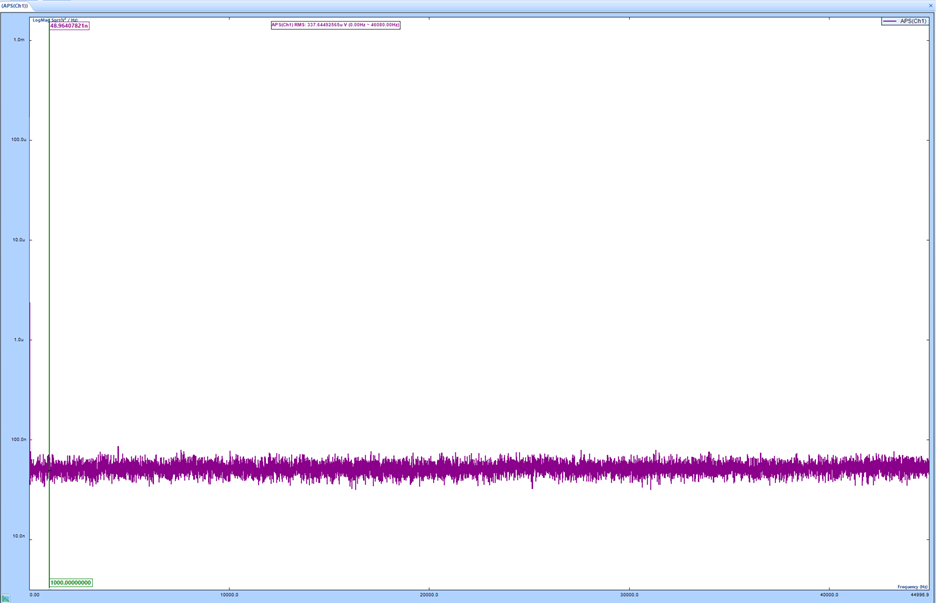
All electronic systems are subject to noise. In general, noise is the portion of a signal that is undesirable, which means that the perspective or context is important for determining what noise is.
Read More
Modal Analysis of Robot Using EDM Modal
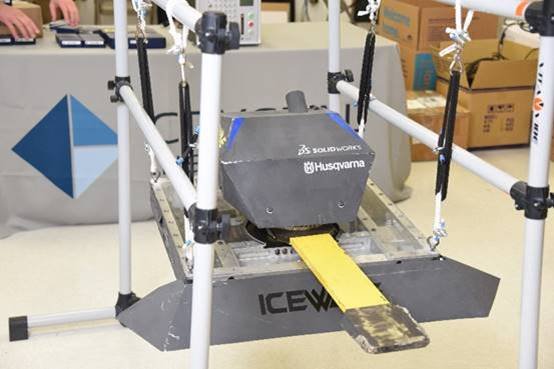
In this case, the modal characteristics of a robot are acquired by performing experimental modal analysis. This robot is used in combats where the winner tries to destroy the opponent by causing damage or breaking crucial components. A quick modal survey reveals the natural frequencies, damping and mode shapes of the robot which helps users identify weak links in the structure. Hence, modal analysis plays a significant part in optimizing the design and performance of these robots.
Read More
Modal Analysis of Processing Equipment Using EDM Modal
The case described in this article studies the modal characteristics of processing equipment acquired through experimental modal analysis. A hammer impact test is carried out with two tri-axial accelerometers to study the modal behavior of the test unit. The roving response method obtains a complete FRF column.
Read More
Tech Talks by TANDM in South Africa (March 15 & 17, 2022)
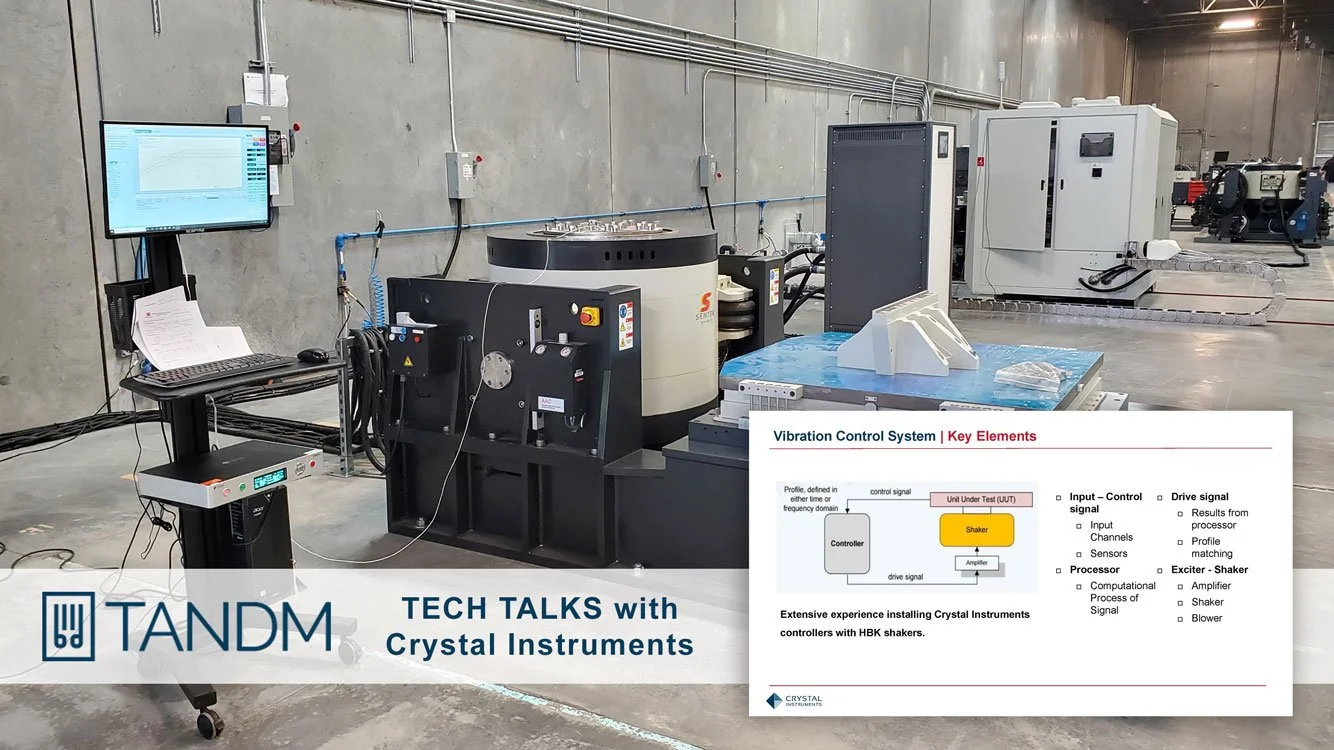
Technical sessions (Tech Talks) exploring Electrodynamic Vibration Testing technology were organized by Crystal Instruments partner TANDM in South Africa at Cape Town Hazendal Wine Estate, Stellenbosch on March 15, 2022 and at Pretoria, Future Africa, University of Pretoria on March 17, 2022.
Read More
International Modal Analysis Conference XL
Crystal Instruments (CI) recently attended the International Modal Analysis Conference (IMAC) held during the week of February 7–10, 2022 at the Rosen Plaza hotel in Orlando Florida. The conference was an all-around enjoyable experience, and it was good to be back in person to interact with and discuss the on-going work folks are pursuing in modal analysis.
Read More
Auto-Wake Function for Data Acquisition (DAQ), Machine Condition Monitoring, and Vibration Analysis
The auto-wake feature is a new and powerful function provided in EDM 10.0 software. This feature allows users to set up a wake-up alarm for Spiders to power on, perform a test, and power off. Users can upload up to 8 predefined tests and run these in Black Box mode (without a connection to a computer or network to run). This convenient mode allows users to acquire data autonomously or with little user intervention.
Read More
Advantages of Circular Recording vs. Standard Timestream Recording
Some data acquisition applications will inevitability run into one of the most common problems of the information age: information overload. Today, modern DAQ systems, such as the highly versatile Crystal Instruments Spider product line, can store significant amounts of vibration data. Now, memory limitations are significant. However, sifting through large amounts of data in order to capture a small transient event is undesirable.
Read More