
Vibration Testing Package Delivery Drones Using the Spider-81 Controller and Sentek Dynamics Shakers
Ensuring Drone Reliability from Warehouse to Final Delivery
Package delivery drones are transforming last-mile logistics by providing rapid, autonomous transportation of goods. However, these aircraft must operate reliably despite continuous exposure to vibration during transportation, launch, flight, landing, and routine handling. From delicate avionics and batteries to propulsion systems and payload mechanisms, every subsystem must withstand dynamic loading throughout the drone's operational life.
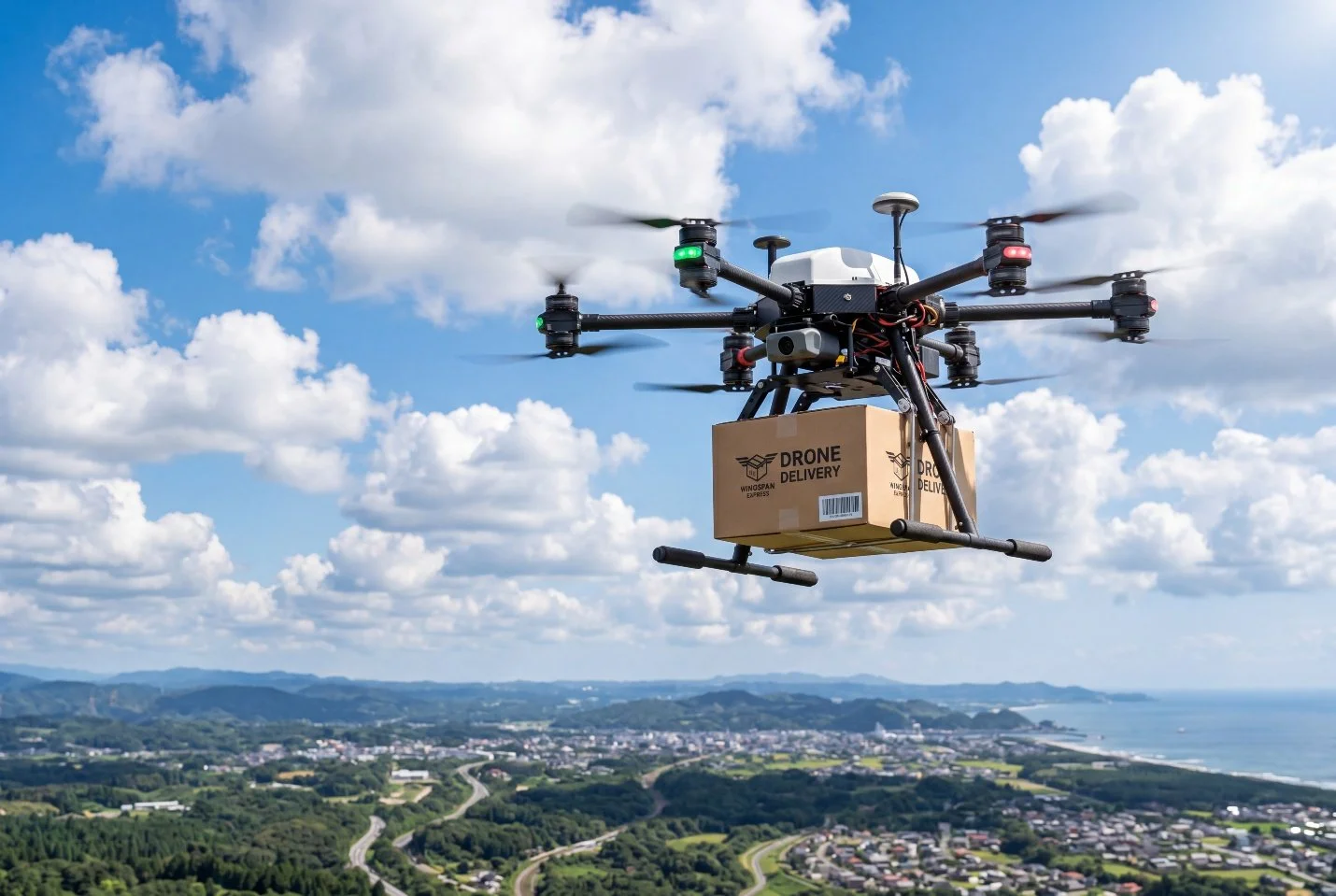
Laboratory vibration testing enables manufacturers to validate structural integrity, identify resonances, improve product durability, and verify compliance with industry and customer specifications before drones enter service.
A complete vibration testing solution combining the Crystal Instruments Spider-81 vibration controller with Sentek Dynamics electrodynamic shaker systems provides a powerful platform for qualifying package delivery drones and their critical components.
Why Vibration Testing Matters for Delivery Drones
Although delivery drones are lightweight, they experience complex vibration environments throughout their lifecycle:
Brushless motor and propeller excitation
Flight maneuvers and turbulence
Landing impacts
Transportation in delivery vehicles
Shipping prior to deployment
Repeated mission cycles over thousands of flight hours
These vibration loads can cause:
Electronic connector failures
Cracked solder joints
Sensor calibration drift
Battery mount fatigue
Structural cracking
Fastener loosening
Payload release mechanism wear
IMU and GPS performance degradation
Early identification of these failure mechanisms significantly reduces field failures and increases operational reliability.
Sentek Dynamics Shaker Systems Simulate Real-World Vibration
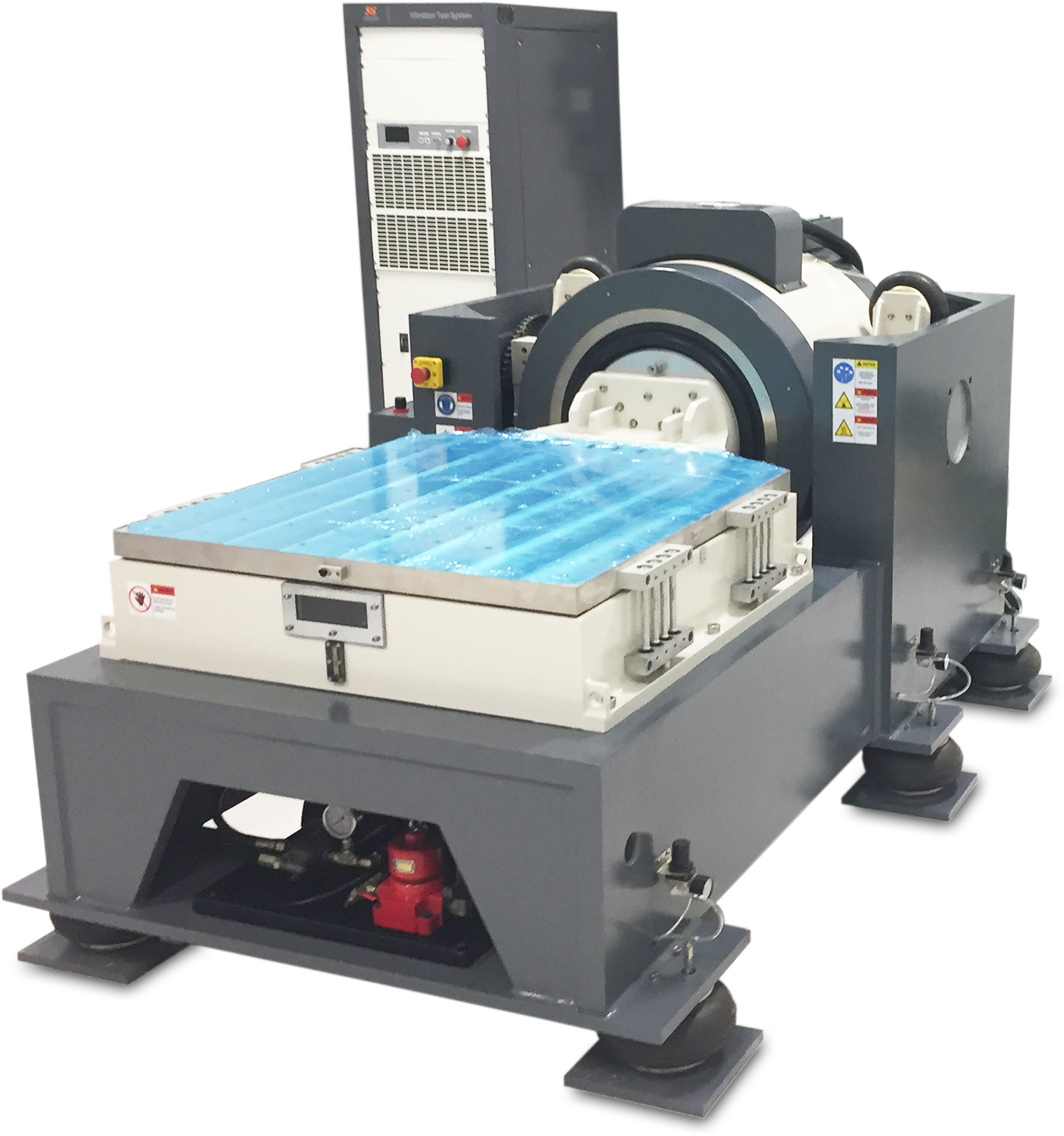
Sentek Dynamics medium-force electrodynamic shaker systems generate precise, repeatable vibration profiles across a wide frequency range, making them well suited for testing:
Complete drone assemblies
Flight controllers
Navigation electronics
Cameras and vision systems
Battery packs
Payload release systems
Landing gear
Communication modules
Packaging used for drone shipment
The shaker reproduces laboratory-controlled vibration environments while maintaining highly repeatable motion for engineering analysis.
Depending on the test objective, engineers can mount an entire drone or isolate individual subsystems using custom fixtures to evaluate their vibration performance.
Spider-81 Provides Advanced Closed-Loop Vibration Control
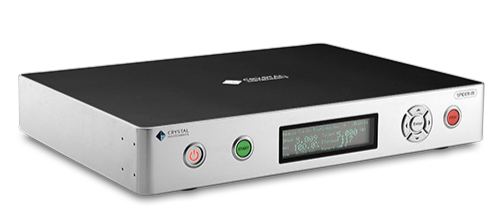
The Spider-81 vibration controller serves as the intelligence behind the vibration test system. It continuously measures response signals from accelerometers and adjusts shaker output in real time to accurately reproduce the desired vibration environment. The Spider-81 features embedded DSP-based control with time-synchronized Ethernet architecture, supports multiple vibration control modes, operates independently of the host PC in Black Box mode, and scales from standalone systems to high-channel-count configurations. It also supports IEPE, TEDS, charge, and voltage sensors commonly used in vibration testing.
The controller supports a comprehensive suite of vibration testing methods including:
Random vibration
Swept sine
Sine-on-random
Random-on-random
Classical shock
Time waveform replication
Resonance search and track & dwell
Shock Response Spectrum (SRS)
These capabilities allow engineers to recreate virtually every vibration environment encountered during drone development and operation.
Typical Drone Qualification Tests
Random Vibration Testing
Random vibration testing simulates the broadband vibration experienced during normal flight and transportation.
Applications include:
Airframe qualification
Battery retention verification
Electronic reliability testing
Payload security validation
The Spider-81 continuously adjusts shaker output using closed-loop control to maintain the target Power Spectral Density (PSD), ensuring accurate reproduction of specified vibration environments.

Swept Sine Testing
Swept sine testing identifies structural resonances by gradually sweeping through a defined frequency range.
Engineers use this method to:
Locate resonant frequencies
Evaluate structural stiffness
Improve mounting designs
Verify isolation systems
Finding resonances early allows designers to reinforce structures or modify component placement before production.

Classical Shock Testing
Although drones primarily experience vibration, they are also subjected to shock events during:
Hard landings
Emergency recoveries
Transportation drops
Maintenance handling
The Spider-81 can generate repeatable classical shock profiles to evaluate the survivability of sensitive electronics and mechanical assemblies.
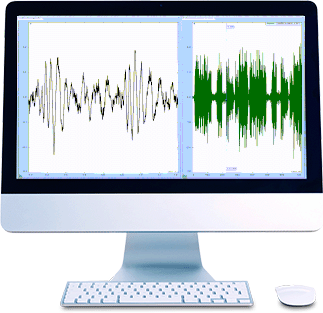
Time Waveform Replication
Flight testing often reveals vibration environments that cannot be accurately represented using standard sine or random profiles.
Using Time Waveform Replication (TWR), engineers can record actual vibration data during drone flights and reproduce those exact vibration histories on the laboratory shaker. This enables highly realistic durability testing without requiring repeated outdoor flight testing.
Multi-Channel Measurements Improve Insight
Modern delivery drones contain numerous critical subsystems operating simultaneously.
By instrumenting multiple locations with accelerometers, engineers can monitor vibration at:
Motor mounts
Battery trays
Flight controller
Camera gimbal
Landing gear
Payload compartment
Airframe structure
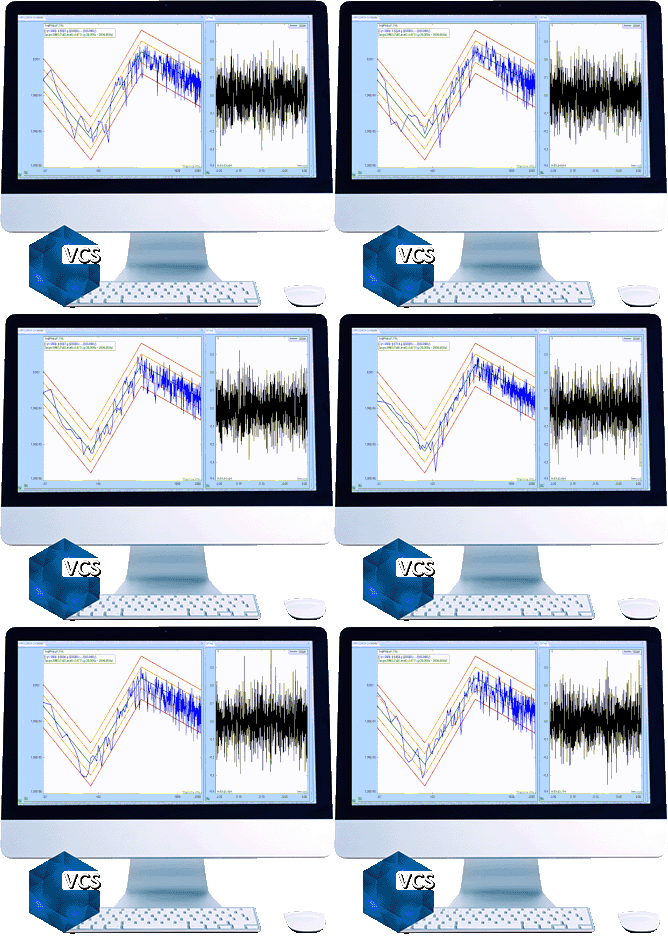
The Spider-81 supports scalable multi-channel measurements, enabling engineers to analyze structural responses throughout the vehicle while controlling the shaker from one reference location. Its distributed architecture and IEEE 1588 time synchronization also allow expansion to much larger synchronized systems when needed.
Supporting Design Validation and Production Testing
A Spider-81 and Sentek Dynamics vibration testing system supports multiple stages of product development:
Research and Development
Compare prototype designs
Optimize structural stiffness
Reduce vibration transmission
Validate finite element models
Design Verification
Perform qualification testing
Validate flight electronics
Verify payload retention
Evaluate battery mounting systems
Production Quality Assurance
Manufacturers can perform acceptance testing on production hardware to detect assembly issues before shipment.
Failure Analysis
If field failures occur, engineers can recreate measured vibration environments in the laboratory to isolate root causes and verify corrective actions.
An Integrated Vibration Testing Solution
Crystal Instruments and Sentek Dynamics provide a complementary testing platform. Sentek Dynamics shaker systems generate precise mechanical excitation, while the Spider-81 continuously monitors system response and adjusts vibration output to maintain accurate closed-loop control. Crystal Instruments notes that its Spider controllers support a wide variety of electrodynamic and hydraulic shakers, including Sentek Dynamics systems, and Sentek offers the Spider-81 as its premium vibration controller for shaker installations.
Together, they enable engineers to perform highly repeatable laboratory testing with confidence across a broad range of aerospace and unmanned aircraft applications.
Conclusion
As package delivery drones become increasingly important in logistics, reliability testing becomes essential. Every connector, battery mount, electronic assembly, and structural component must withstand thousands of vibration cycles throughout the product's service life.
Combining the Crystal Instruments Spider-81 vibration controller with Sentek Dynamics medium-force shaker systems provides manufacturers with a versatile, high-performance vibration testing solution capable of reproducing real-world operating conditions. From resonance identification and durability testing to qualification and production validation, this integrated platform helps engineers improve drone reliability, reduce development risk, and accelerate the deployment of dependable autonomous delivery systems.