
Capturing History: Crystal Instruments GRS Records the First Sonic Event During NASA X-59 Supersonic Flight Testing
When NASA's X-59 quiet supersonic research aircraft exceeded the speed of sound for the first time on June 5, 2026, it marked a historic milestone in the agency's mission to revolutionize supersonic flight. The aircraft reached approximately Mach 1.1 at 43,400 feet over Edwards Air Force Base, advancing NASA's effort to demonstrate low-boom supersonic technology that could one day enable faster commercial air travel over land.
For Crystal Instruments, the achievement carried special significance.
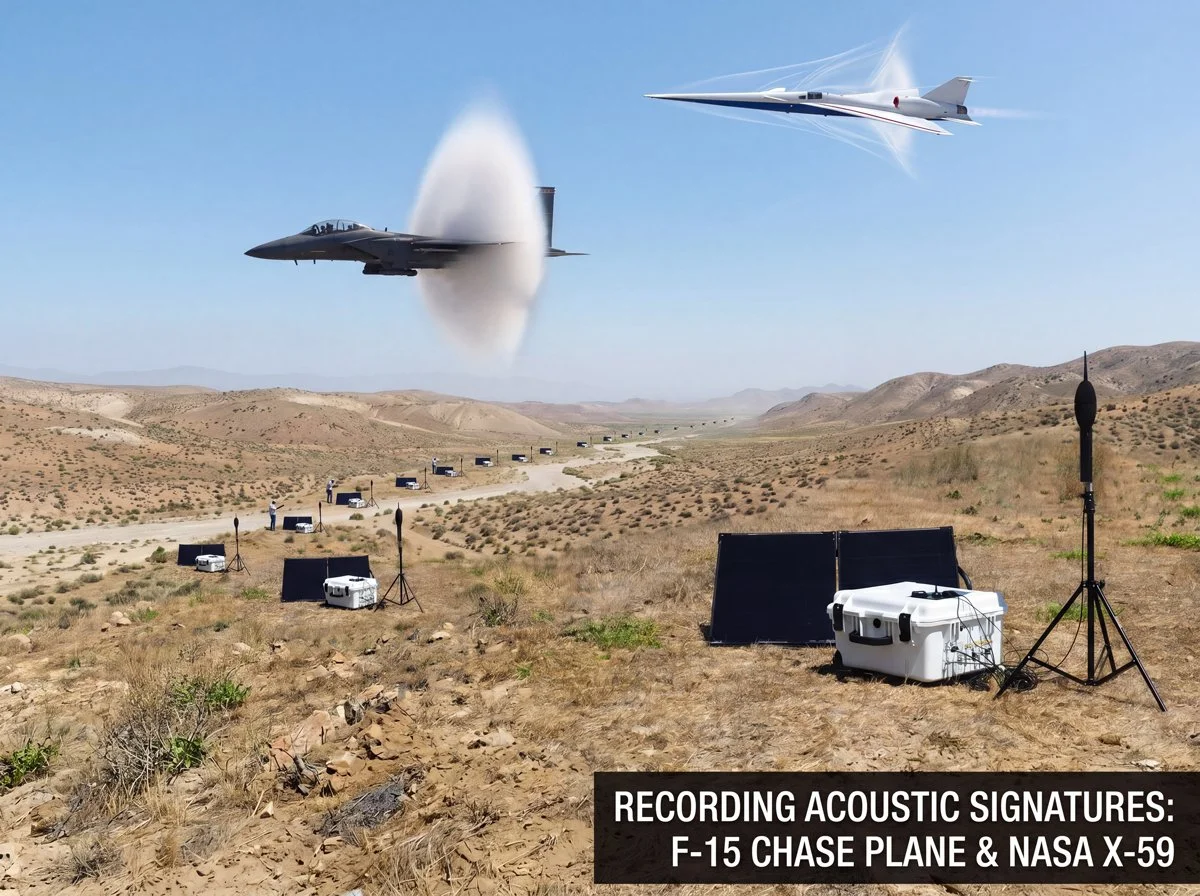
Simulated image of Ground Recorder System (GRS) capturing data from the X-59 test flight
Years before the X-59's first supersonic flight, NASA selected the Crystal Instruments Ground Recorder System (GRS) as part of its acoustic measurement infrastructure for the Quesst mission. The GRS was specifically chosen to capture and analyze sonic booms and the quieter "sonic thumps" expected from the X-59's innovative design.
Built for the Mission
The Ground Recorder System is a rugged, portable, battery-powered dynamic measurement platform designed for high-precision acoustic and vibration monitoring in demanding environments. Combining advanced data acquisition, real-time signal analysis, and autonomous operation, the GRS provides the performance and reliability required for aerospace field testing.
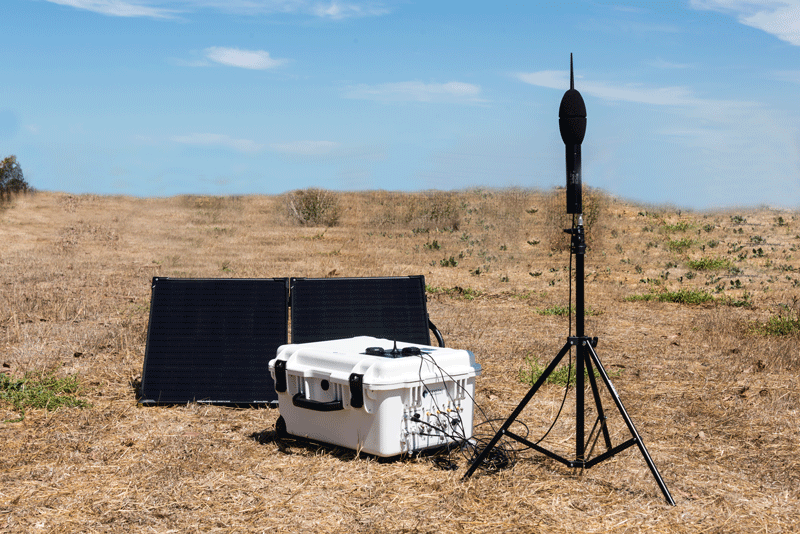
NASA's acoustic measurement campaign relies on distributed ground-based sensors capable of capturing subtle pressure signatures generated by aircraft flying at supersonic speeds. The GRS was designed to meet these demanding requirements, including the ability to support specialized analysis algorithms for real-time sonic thump characterization.
The First Supersonic Flight
On June 5, NASA test pilot Jim "Clue" Less guided the X-59 through its first successful supersonic flight. The aircraft's unique shape is intended to transform the disruptive sonic boom traditionally associated with supersonic flight into a much quieter acoustic signature known as a sonic thump.
As the aircraft accelerated through the sound barrier, the Crystal Instruments GRS units deployed for the mission performed exactly as intended. The systems operated flawlessly throughout the test and successfully captured the first significant sonic event associated with the flight campaign.
The result, however, revealed an interesting and important lesson in flight-test acoustics.
A Perfect Recording and an Unexpected Source
Following analysis of the recorded data, engineers determined that the captured boom did not originate from the X-59 itself. Instead, the acoustic signature was produced by the F-15 chase aircraft that accompanied the X-59 during the test flight and also exceeded the speed of sound. Recent reports from the flight test program confirmed that the louder sonic boom generated by the trailing F-15 masked the X-59's much quieter acoustic signature during these early supersonic demonstrations.
Far from being a disappointment, the finding demonstrated exactly what NASA and Crystal Instruments hoped to validate: the measurement system worked.
The GRS successfully detected, recorded, and preserved the sonic event with the fidelity required for detailed post-flight analysis. The fact that engineers could confidently identify the source of the boom as the F-15 rather than the X-59 highlights the quality of the recorded data and the effectiveness of the measurement infrastructure.
Proving Readiness for Future Sonic Thump Measurements
The first supersonic flight of the X-59 was never solely about achieving Mach 1. It was also about validating the entire ecosystem of aircraft, sensors, ground instrumentation, and analysis tools that will support future community response studies and regulatory research.
The flawless performance of the Crystal Instruments GRS during this milestone flight demonstrates its readiness for the next phase of testing, when NASA will focus on accurately measuring the X-59's unique low-boom acoustic footprint. These measurements will help provide the data needed to shape future regulations governing commercial supersonic flight over land.
Looking Ahead
NASA's vision for the X-59 is ambitious: proving that supersonic aircraft can fly faster than sound without producing the disruptive booms that have restricted overland supersonic travel for decades. As flight testing expands, precise acoustic measurements will remain critical to validating the aircraft's performance.
Crystal Instruments is proud that the Ground Recorder System is playing a role in this historic effort. From the first captured supersonic boom to the future recording of the X-59's signature sonic thumps, the GRS continues to demonstrate the reliability, precision, and performance required for some of the world's most demanding aerospace measurement challenges.
History was made when the X-59 went supersonic. The Crystal Instruments GRS was there to record it.