Crystal Instruments to Showcase Advanced Vibration Testing Solutions at Space Tech Expo Europe 2026
Crystal Instruments will showcase its latest vibration testing, data acquisition, and modal analysis solutions at Space Tech Expo Europe 2026 in Bremen, Germany. Visit us at Hall 6, Booth U67, to explore our technologies for space and aerospace applications.
Read More
Choosing a Charge Amplifier for Your Spider: Built-In, Inline, or CA-08A
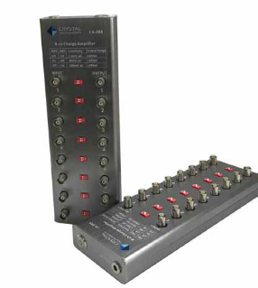
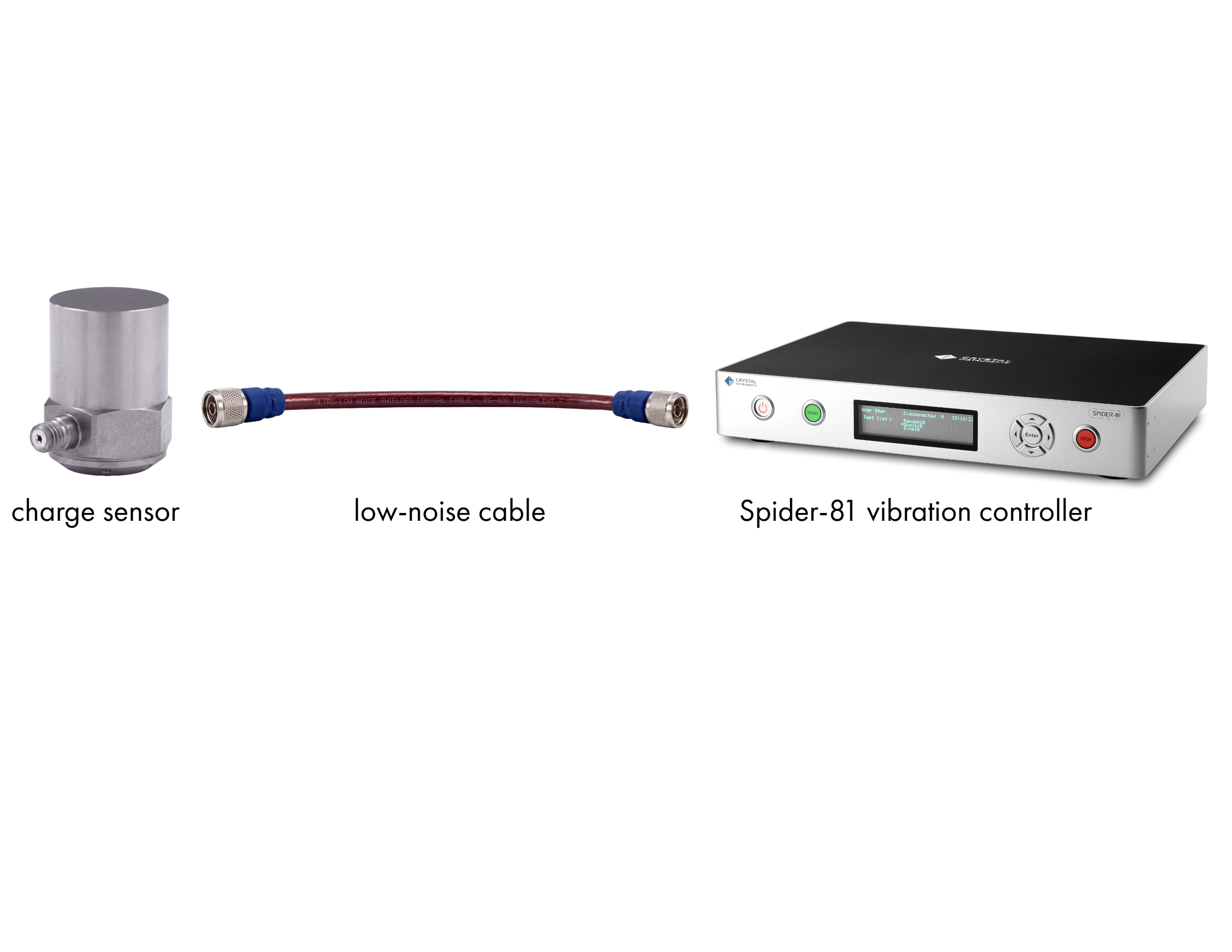
Several Spider models include built-in charge amplifiers on their input channels, so a charge sensor can be wired directly into the Spider without any external hardware. Available built-in charge modes include 49000 pC, 10000 pC, 10100 pC, and 1000 pC, and the modes offered vary by Spider model. Check the specification sheet for your unit before assuming a mode is available.
Read More
Join us at the 2026 Shock and Vibration Symposium and Turbomachinery & Pump Symposia
Our team will exhibit at two major engineering events in September 2026: the 96th Shock and Vibration Symposium in Orlando, Florida, and the Turbomachinery & Pump Symposia in Houston, Texas. Engineers, researchers and reliability professionals are invited to visit our booths to explore advanced solutions for vibration testing, dynamic signal analysis, data acquisition and machine condition monitoring.
Read More
Satellite Vibration Testing and Force Limiting at SmallSat 2026
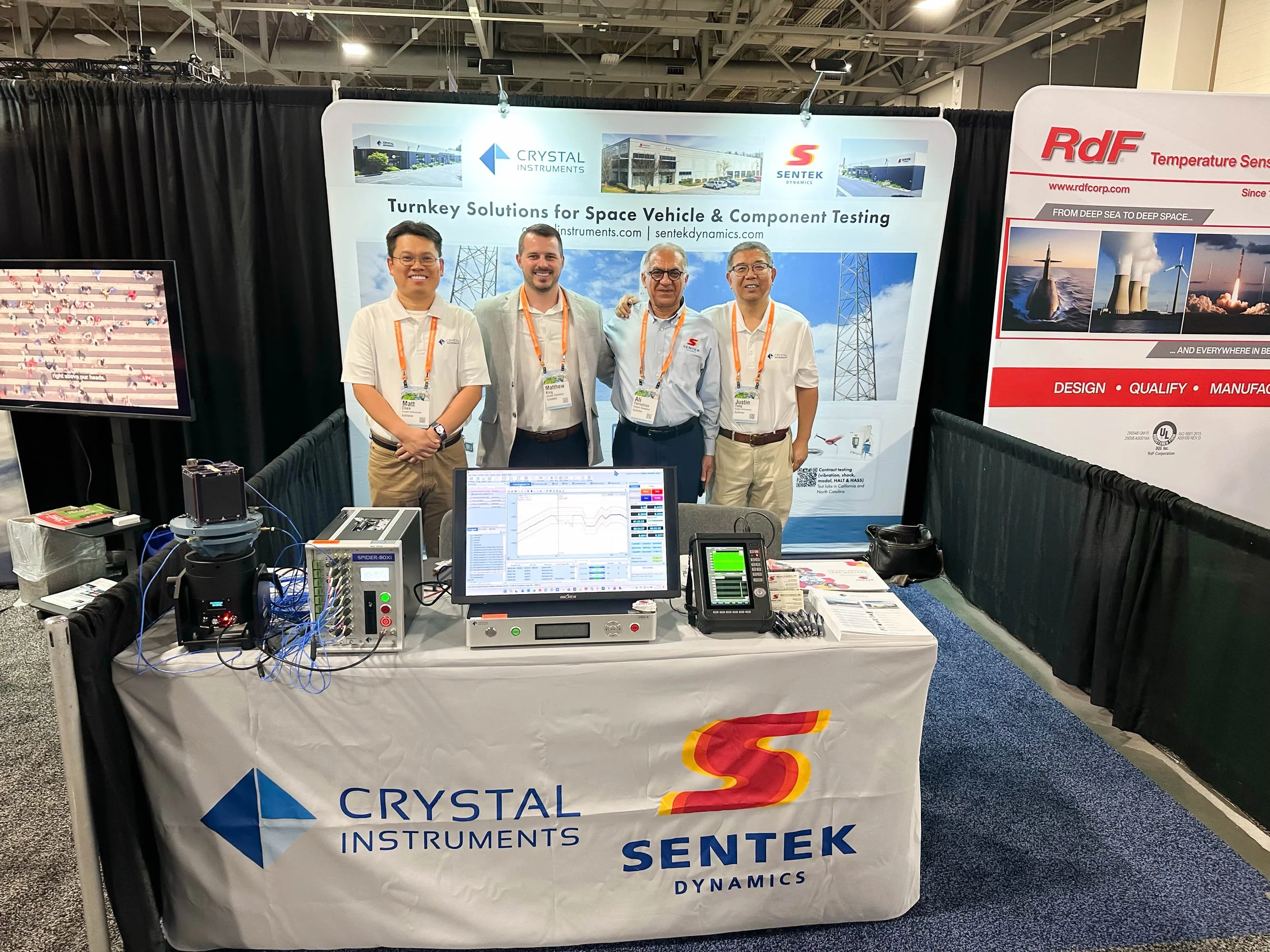
Crystal Instruments attended the 40th Annual Small Satellite Conference (SmallSat 2026), held Aug. 24–28 at the Salt Palace Convention Center in Salt Lake City, Utah. The event brought together thousands of professionals from government, aerospace, industry, and academia to explore technologies supporting small satellite development, qualification, launch, and operation.
Read More
Meet us at VIATC 2026 and the Small Satellite Conference
Crystal Instruments is preparing for two major industry events in August 2026: the Vibration Institute Annual Training Conference (VIATC) and the 40th Annual Small Satellite Conference. These conferences bring together professionals from the two distinct but closely connected fields of machinery vibration and reliability, and small satellite development.
Read More
Vibration Testing Package Delivery Drones Using the Spider-81 Controller and Sentek Dynamics Shakers
From delicate avionics and batteries to propulsion systems and payload mechanisms, every subsystem must withstand dynamic loading throughout the drone's operational life.
Read More
Crystal Instruments Supports Advanced Satellite Vibration Testing at MYSA (Malaysian Space Agency)
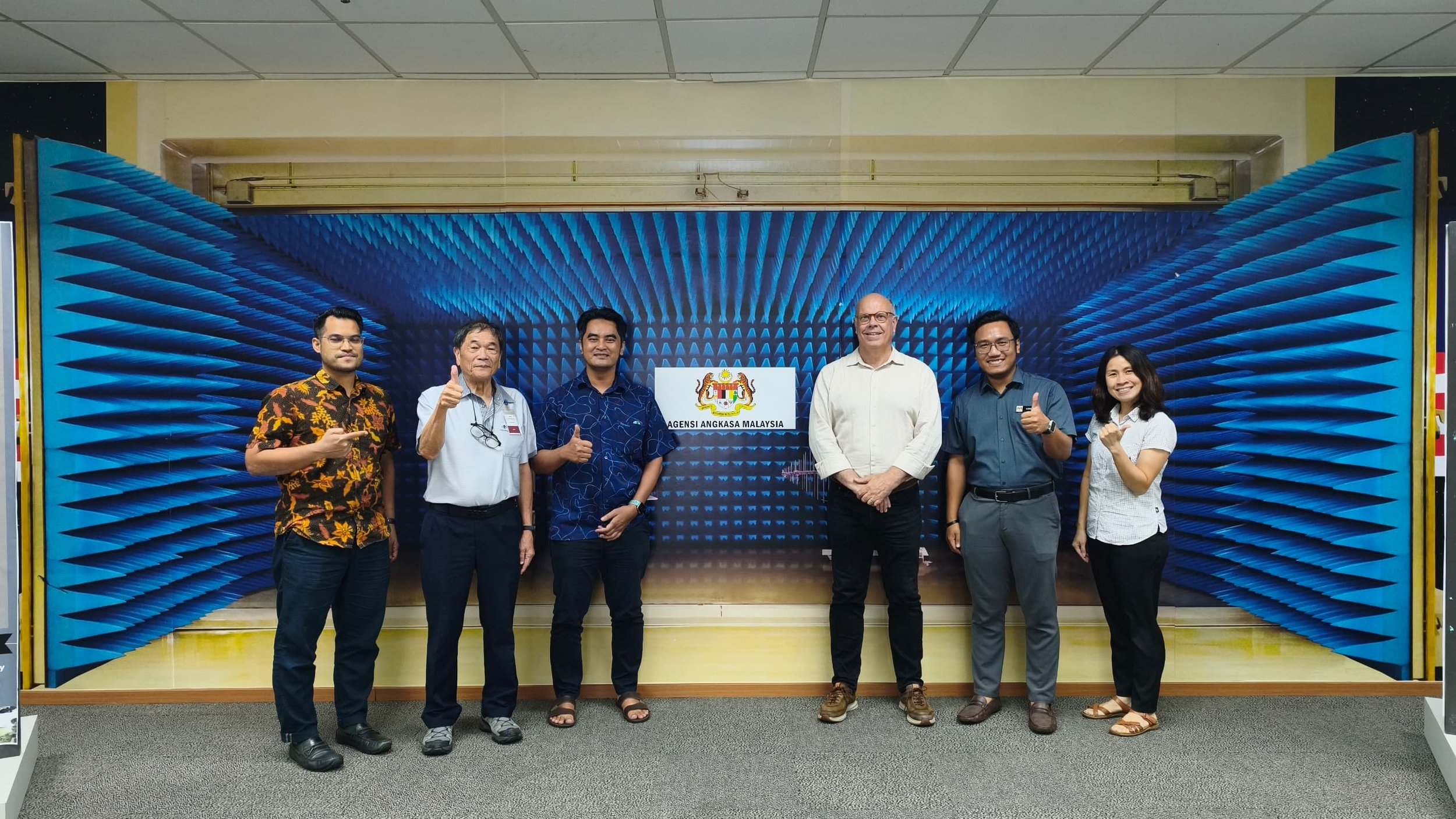
Crystal Instruments recently visited the Malaysian Space Agency (MYSA), where our high-channel-count dynamic measurement systems are supporting vibration testing applications for satellite programs. During the visit, our Europe Sales Manager, Jordi Gargallo, met with MYSA engineers together with our regional distributor, LOGICOM Instruments Pte Ltd, to review their current testing workflow and discuss future collaboration opportunities.
Read More
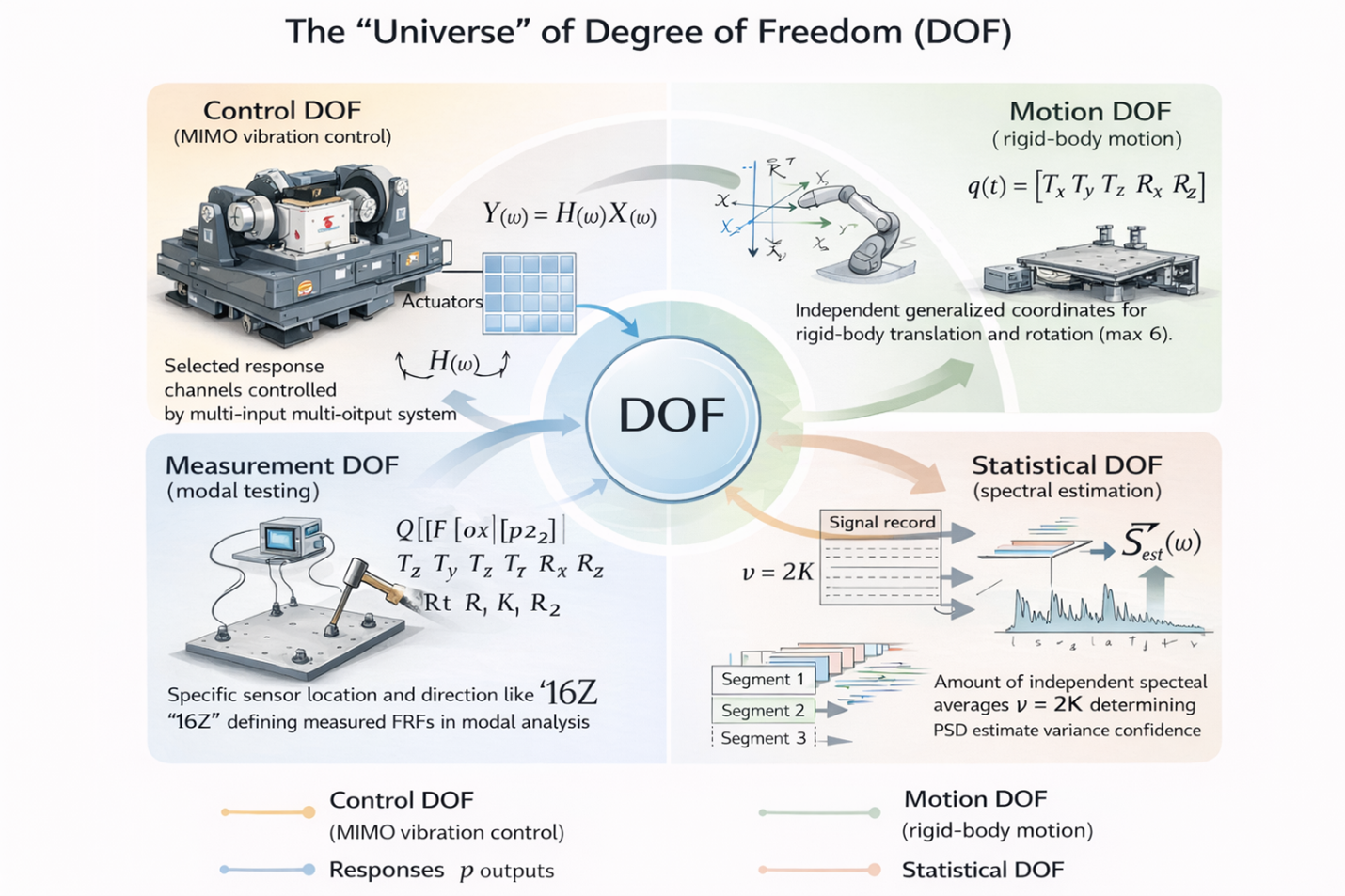
A Mathematical View of “Degree of Freedom” in Vibration Test
The term Degree of Freedom (DOF) appears in many areas of engineering. However, the same phrase refers to very different mathematical concepts depending on context.
Read More
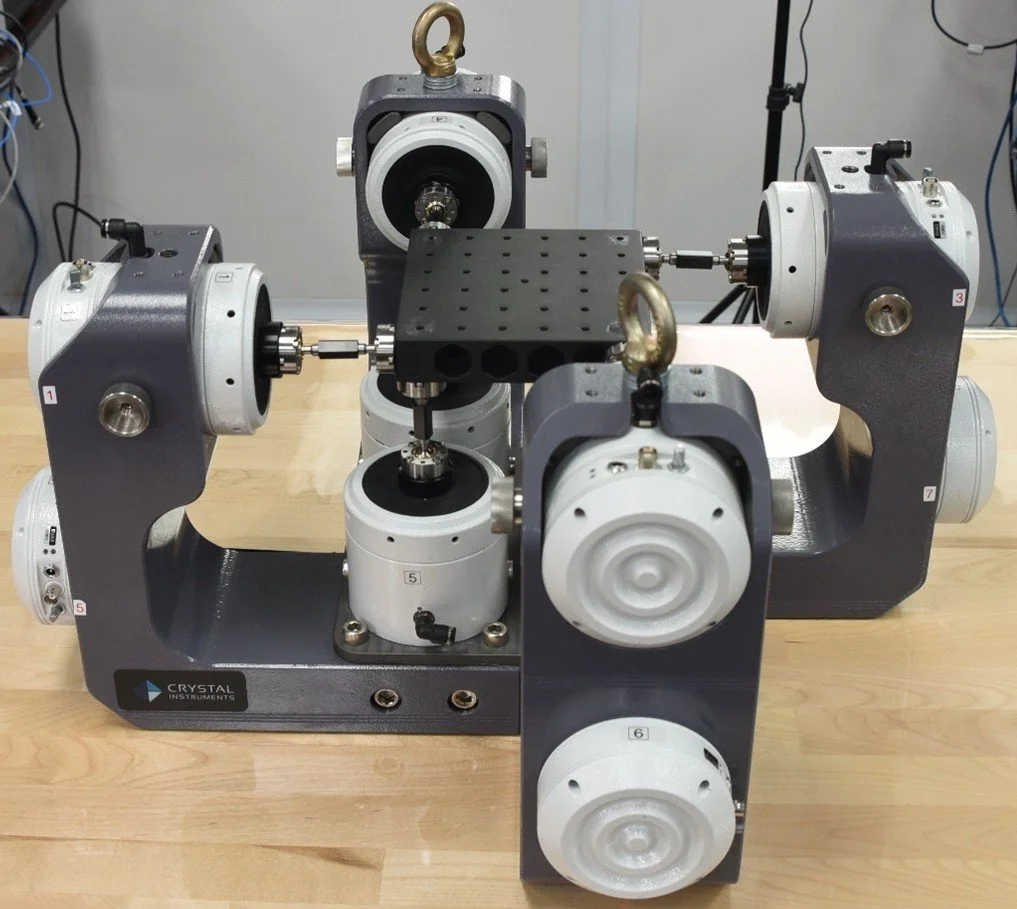
8-Shaker MIMO Vibration Test System: Advanced Multi-Input Multi-Output Control for Structural Testing
At our Santa Clara headquarters, the Crystal Instruments engineering team has constructed an 8-shaker MIMO vibration test system to demonstrate advanced multi-input multi-output (MIMO) control capabilities. This tabletop platform integrates eight coordinated shakers arranged around a central test structure, allowing us to reproduce complex excitation patterns and investigate sophisticated vibration control strategies.
Read More
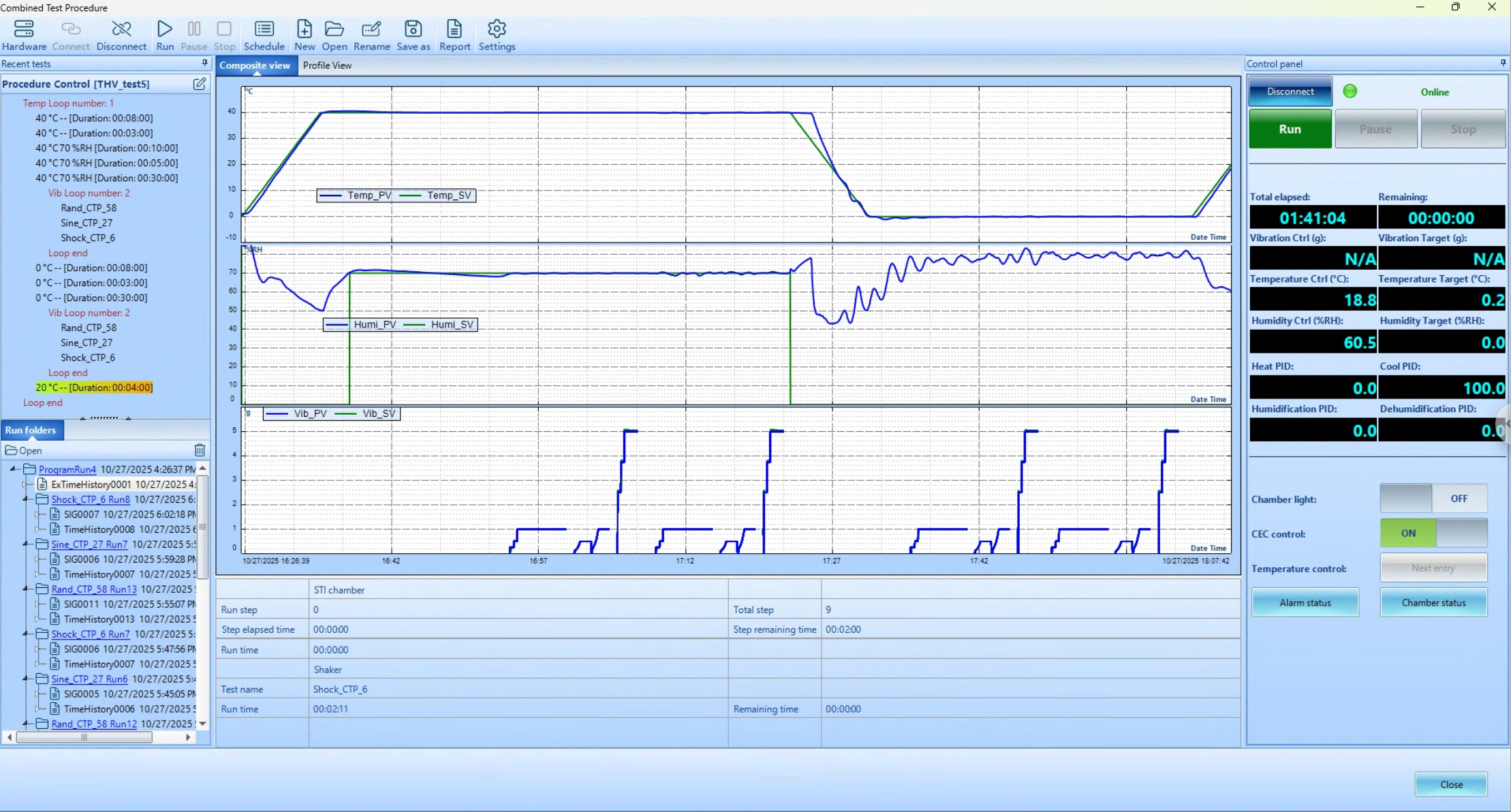
Seamless Environmental Testing with Combined Test Procedure (CTP) in EDM 12.1
For engineers needing to verify performance against rigorous requirements, CTP ensures adherence to complex standards like MIL-STD-810H Method 520.5 Combined Environments. The new Combined Test Procedure (CTP) feature in EDM 12.1 allows users to synchronize temperature, humidity, and vibration testing in a single, unified workflow.
Read More
Multiple-Input Multiple-Output (MIMO) Sine-on-Random Vibration Control
Traditional SoR control methods, whether single-axis sequential testing or multi-axis TWR waveform replication, have significant limitations in representing true multi-directional vibration environments. The development of Crystal Instruments’ real MIMO Sine-on-Random control overcomes these barriers by integrating advanced adaptive MIMO algorithms with independent control of sine and random components
Read More
New Vibration Testing Shaker at CI Testing Lab
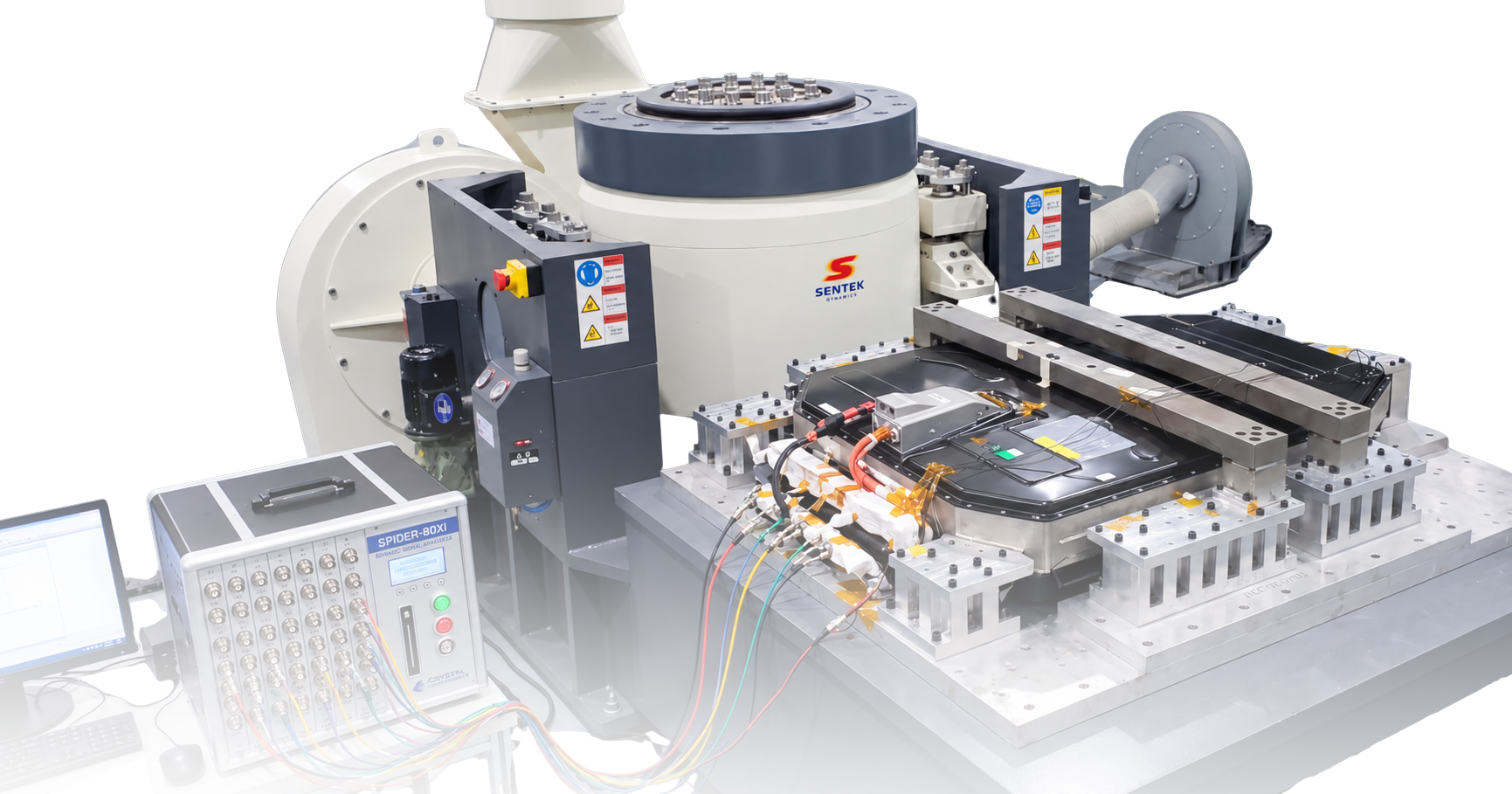
Air cooled 60 kN electrodynamic shaker is capable of testing medium to large size assemblies up to 1000 kg on the bare armature, with even more load support utilizing the head expander (with pneumatic load support) or the high pressure slip plate.
Read More